
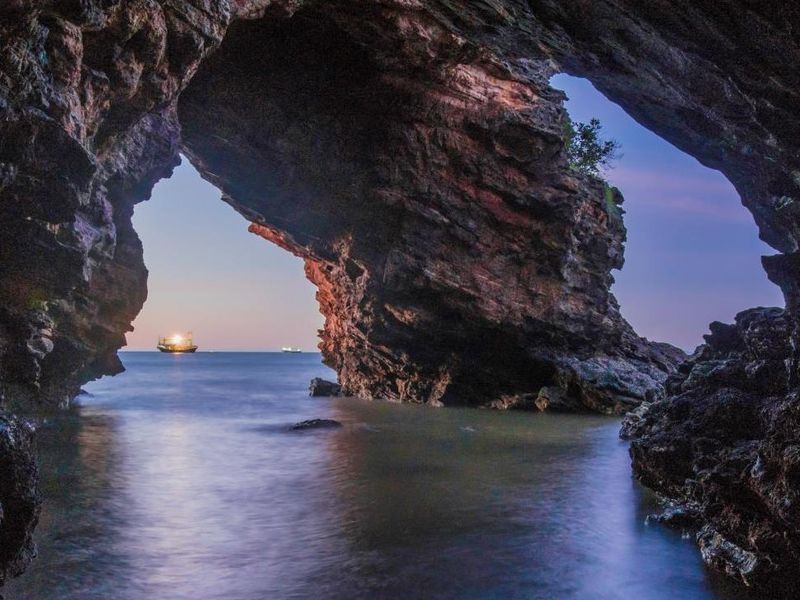
Amid the vast seascape of Lach Quen Estuary, at the foot of Manh Son Mountain, Mui Trau Cave in Quynh Phu Commune, Nghe An Province, stands out for its pristine and fascinating natural beauty. Towering rock formations, natural caves, and unusual shapes sculpted by waves and time create a captivating landscape with great potential for nature-based tourism.
The cave’s most distinctive feature is a rocky outcrop extending toward the sea, with two naturally eroded openings resembling the nostrils of a buffalo. This unique formation inspired the name “Mui Trau,” which means “Buffalo Cape.” Inside, visitors can discover a series of natural chambers, rock arches, and narrow passages, creating a mysterious yet fascinating atmosphere. The combination of rocky cliffs, coastal formations, and the expansive estuary makes this destination truly distinctive.
One of the most interesting aspects of exploring Mui Trau Cave is its dependence on the tides. When the tide recedes, coastal paths and rocky areas emerge, allowing visitors to approach the cave. Sunlight filtering through the rock formations, the sound of waves echoing inside, and panoramic sea views offer a memorable experience close to nature. However, visitors should check tide schedules and take necessary safety precautions.
Beyond its natural beauty, Mui Trau is closely connected to the lives of local fishermen in the Lach Quen coastal area. For generations, this natural landmark has served as a familiar reference point for fishermen navigating their journeys at sea. Today, as interest in discovering lesser-known destinations grows, Mui Trau Cave is gradually attracting attention as a promising tourism attraction.
With its distinctive geological formations and scenic coastal setting, the area has potential for sightseeing, photography, cave exploration, and ecotourism activities. To develop this potential sustainably, improvements to access routes, visitor signage, and safety measures are needed, alongside efforts to protect the environment and preserve the site’s natural character.
Without elaborate man-made structures, Mui Trau Cave captivates visitors through its naturally sculpted rocks and the magnificent scenery of Lach Quen Estuary. Promoting its tourism value while preserving its natural heritage could help establish this remarkable site as a new highlight on the tourism map of Nghe An Province.