
The Chinese community is one of Vietnam’s long-established ethnic communities, with a history shaped by different waves of migration from China. Many Chinese migrants arrived in Vietnam during different periods, particularly from the 17th and 18th centuries. Large numbers came from southern Chinese regions such as Guangdong, Fujian, Chaozhou, Hainan, and Guangxi, later settling in various parts of the country, especially in urban areas and southern Vietnam.
Over time, Chinese communities established stable settlements and became actively involved in Vietnam’s economic, commercial, and social life. Despite historical changes, they have preserved many traditional customs while also adapting to Vietnamese culture. This cultural interaction has created a distinctive Chinese Vietnamese identity.
One of the most notable features is their diverse spiritual life. Buddhism, Taoism, and traditional folk beliefs coexist within the community. Temples, shrines, and assembly halls serve not only as places of worship but also as important spaces for community gatherings and cultural preservation.
Traditional festivals are another important part of Chinese cultural life in Vietnam. Lunar New Year, the Lantern Festival, and celebrations at temples and shrines often feature lion and dragon dances, lanterns, and ceremonies wishing for peace, prosperity, and good fortune. These occasions also bring families and different generations together.
Food is another defining element of Chinese heritage. Chinese Vietnamese cuisine is diverse in flavor and preparation, with many dishes carrying symbolic meanings during festivals, weddings, and family celebrations. Over generations, traditional dishes have also been adapted to local tastes and become familiar parts of Vietnamese cuisine.
Architecture and community spaces further reflect Chinese cultural heritage. Assembly halls, historic temples, and Chinese neighborhoods often feature tiled roofs, lanterns, traditional patterns, and decorative details inspired by Chinese architecture.
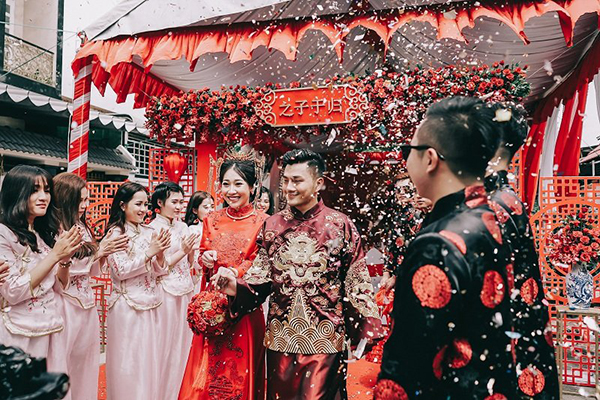
Family and community values also remain important. Customs such as ancestor worship, wedding traditions, Lunar New Year celebrations, and family gatherings help strengthen relationships between generations and pass cultural values from one generation to the next.
Today, Chinese culture in Vietnam continues to evolve through the balance between tradition and modern life. Its history, beliefs, festivals, cuisine, architecture, and strong community spirit not only preserve the identity of the Chinese Vietnamese community but also contribute to the rich cultural diversity of Vietnam.