
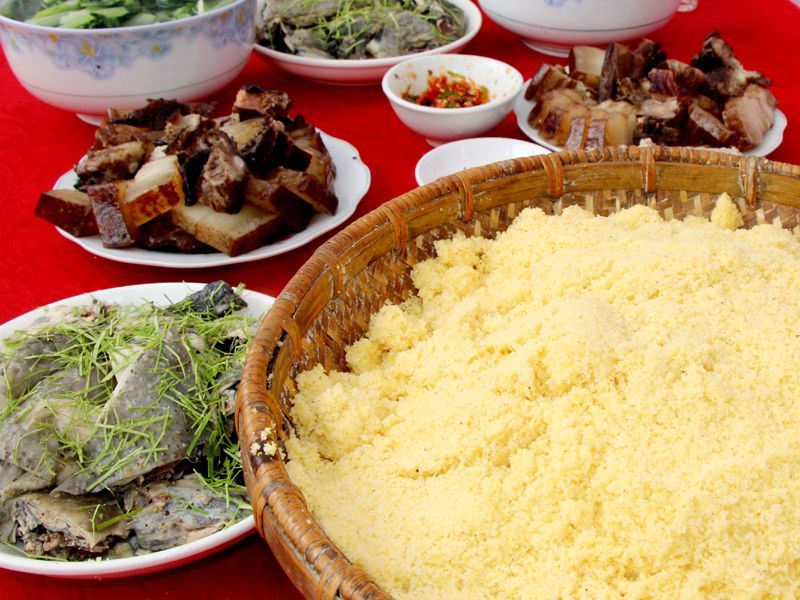
Made from golden corn grown on mountain slopes, Men Men (Mèn Mén) is a traditional dish deeply rooted in the daily lives of the Hmong people in northern Vietnam. Simple in appearance and prepared from humble ingredients, this dish is appreciated for its naturally nutty flavor and traditional cooking method. In mountainous areas such as the former Ha Giang Province, now part of Tuyen Quang Province, Men Men is not only a staple food but also a distinctive part of Hmong culinary culture.
The name “Men Men” comes from the Hmong language and refers to a dish made from steamed cornmeal. To prepare it, local people select mature corn kernels, dry them, remove them from the cobs, and grind them into fine flour. The flour is then sifted carefully and mixed with just enough water before being steamed. This process requires skill and experience, as too much or too little water can affect the final texture. Traditionally, the cornmeal is steamed twice, with the mixture loosened between steaming sessions to ensure even cooking. The result is a soft, fluffy dish that retains the natural aroma of corn.
What makes Men Men interesting is the way a familiar ingredient is transformed into a dish with a unique texture and serving style. Once cooked, the cornmeal has a light yellow color, a crumbly texture, and a naturally nutty, mildly sweet flavor. Unlike rice, which consists of separate grains, Men Men has a fine, loose consistency. To make it easier to enjoy, local people often serve it with vegetable soup, bean soup, or other dishes containing broth. These combinations balance the dryness of the cornmeal and create a simple yet satisfying meal. Visitors may also find Men Men at local highland markets, where it is often displayed in traditional baskets or containers.
Behind Men Men lies a story of how the Hmong people have adapted to life in the mountainous environment. In areas where steep terrain, harsh weather, and limited rice-growing land make wet-rice cultivation difficult, corn has long been an important food source. Using ingredients readily available in their surroundings, local communities developed a method of grinding corn into flour and steaming it for everyday meals. This technique makes effective use of local crops and reflects practical knowledge passed down through generations. Therefore, Men Men is more than just a staple food; it represents the close relationship between people, nature, and traditional farming practices in the highlands.
Today, as cultural tourism in Vietnam’s mountainous regions continues to attract visitors, Men Men has become a worthwhile culinary experience for those interested in discovering Hmong culture. While some famous Vietnamese dishes stand out for their bold seasonings or elaborate preparation, Men Men appeals in a different way: through its simplicity, authenticity, and connection to everyday life. Tasting it alongside local soups or learning how it is prepared directly from local residents allows visitors to better understand the cultural importance of corn in the community.
Men Men offers a different perspective on the cuisine of Northwest Vietnam. Beyond distinctive specialties served during festivals or special occasions, there are also humble everyday dishes that have nourished generations of highland communities. From corn growing on mountain slopes to a bowl of freshly steamed Men Men on the family table, every step reflects the care and experience of the people who prepare it. Its rustic charm has helped Men Men maintain a special place in Hmong culinary traditions while making it a meaningful dish for travelers who wish to discover the authentic culture of Vietnam’s northern highlands through everyday food.