
Made from fragrant sticky rice and crafted with the skillful hands of local people, Banh Day is a traditional delicacy that carries the authentic flavors and cultural heritage of Vietnam’s Northwest mountains.
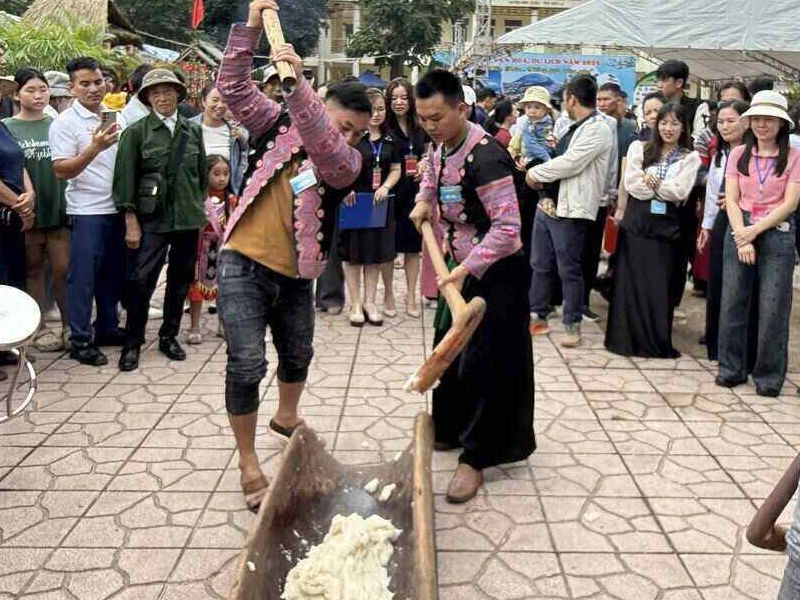
To create these delicious rice cakes, carefully selected sticky rice is washed, soaked, and steamed until perfectly cooked. While the rice is still hot, it is placed into a traditional wooden mortar and pounded repeatedly with a wooden pestle. This is the most important step, requiring patience, strength, and skill. Gradually, the rice grains blend together to form a smooth, soft, and wonderfully elastic dough.
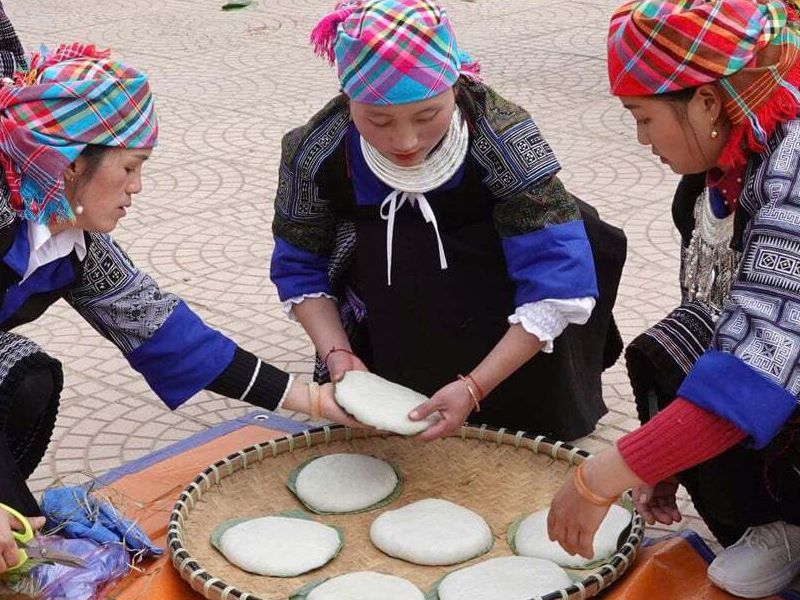
Once thoroughly pounded, the dough is divided into smaller portions and shaped into round, flat cakes. Traditionally, the cakes are placed on banana or dong leaves to preserve their natural fragrance and prevent sticking. The finished cakes are beautifully white, smooth, and pleasantly soft to the touch.
What makes hand-pounded Banh Day so special is its chewy texture, naturally sweet flavor, and the delicate aroma of freshly steamed sticky rice. It can be enjoyed while still soft, grilled over charcoal until lightly golden, or served with honey, sugar, and other traditional accompaniments.
More than just a delicious food, Banh Day represents the craftsmanship, hard work, and community spirit of the people in the mountainous regions. The rhythmic sound of wooden pestles pounding sticky rice has long been a familiar part of traditional village life, reminding generations of the customs and cultural values worth preserving.
Today, despite the growing popularity of modern foods, hand-pounded Banh Day continues to captivate food lovers. Behind every cake lies the dedication of skilled hands, the natural goodness of sticky rice, and a precious culinary tradition passed down through generations.
Hand-pounded Banh Day – Soft and chewy with every bite, rich in traditional flavors, and made with care and dedication. A simple yet meaningful delicacy that captures the authentic spirit of Vietnam’s mountain cuisine.