
Located at 19 Hang Than Street, Ba Dinh District, Hanoi, Hoe Nhai Pagoda is one of the capital’s oldest and most well-known Buddhist temples. Also known by its formal name, Hong Phuc Pagoda, it is not only a place of Buddhist worship but also a repository of significant historical, architectural, and artistic values. Having endured centuries of change, the pagoda has become an important spiritual and cultural landmark in the lives of Hanoi’s people.
According to local legends and some historical accounts, Hoe Nhai Pagoda was originally built during the Ly Dynasty. However, surviving historical records indicate that it underwent numerous renovations and expansions throughout different dynasties. In particular, during the late seventeenth century, the pagoda received considerable attention from eminent Buddhist monks and developed into an important center of Buddhism in northern Vietnam. It became closely associated with the establishment and development of the Cao Dong Zen tradition in Vietnam and is now regarded as one of the important ancestral temples of this Zen lineage.
The pagoda preserves many valuable historical relics, most notably a collection of stone steles documenting its construction, restoration, and Buddhist activities throughout different periods. Among them, a stele erected in the twenty-fourth year of the Chinh Hoa era (1703) is an important historical source that sheds light on the history of the pagoda and the former Dong Bo Dau area. In 1989, Hoe Nhai Pagoda was officially recognized as a National Historical and Cultural Relic, affirming its significance within Hanoi’s cultural heritage.
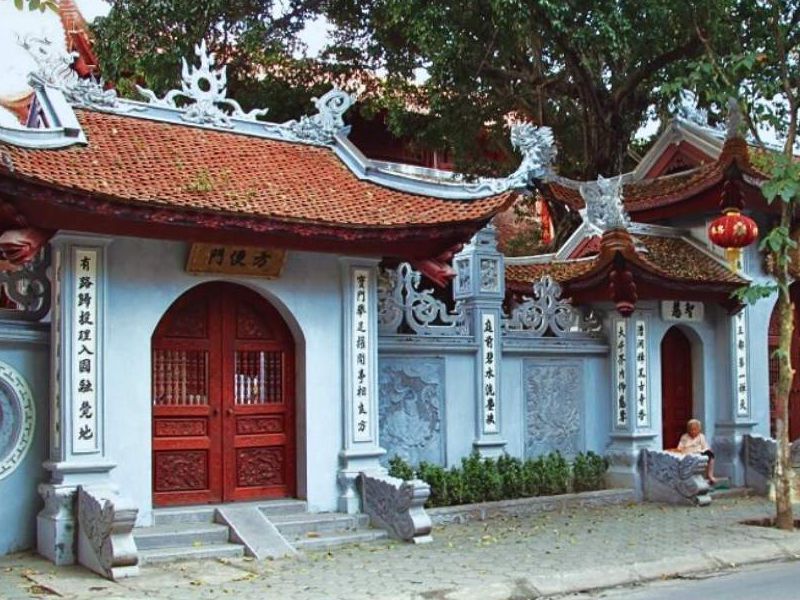
Architecturally, Hoe Nhai Pagoda reflects the distinctive features of traditional Vietnamese Buddhist architecture. Its buildings are arranged harmoniously within the grounds, including the three-entrance gate, front hall, main sanctuary, ancestral hall, monks’ quarters, and corridors. Curved tiled roofs, decorative carvings featuring the four sacred animals, red-lacquered and gilded wooden panels, as well as horizontal boards and parallel couplets create an atmosphere of solemnity and antiquity. The worship area follows the traditional Northern Vietnamese Buddhist style, with numerous carefully crafted statues that hold considerable artistic and religious value.
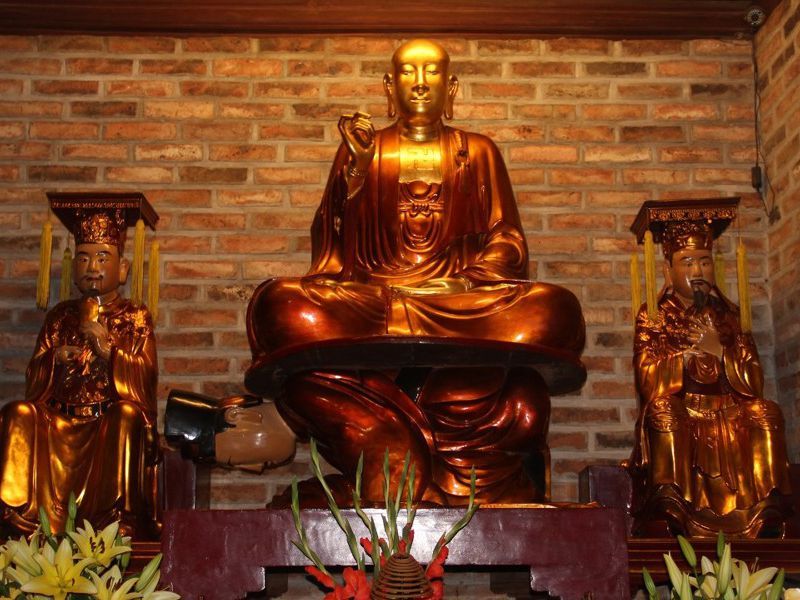
One of the most remarkable features that has made Hoe Nhai Pagoda famous is a statue popularly known as the “King Carrying the Buddha” or the “Repentant King.” The sculpture depicts a king dressed in royal robes, kneeling with his body bent forward, while a seated Buddha rests on his back. This is an unusual and distinctive work of sculpture, rarely found in Vietnamese Buddhist art.
According to a widely circulated legend, the statue is associated with King Le Hy Tong and Zen Master Tong Dien. At a time when the royal court had introduced policies that restricted Buddhism, the Zen master submitted a memorial to the king, explaining the role and noble values of Buddhist teachings. After understanding the message, the king is said to have changed his attitude, expressed remorse, and shown renewed respect for the Buddhist faith. The statue is therefore commonly interpreted as a symbol of spiritual awakening, repentance, and respect for moral principles. Although the story has been interpreted in different ways, the sculpture remains one of the pagoda’s most distinctive attractions, drawing the interest of Buddhist followers and visitors alike.
In addition to this famous statue, Hoe Nhai Pagoda preserves many valuable historical artifacts, including Buddha statues, stone steles, bronze bells, and traditional worship objects. The statues, made from various materials, demonstrate the richness and diversity of traditional Vietnamese sculpture. These artifacts serve not only religious purposes but also provide valuable resources for understanding the history of Buddhism, fine arts, and the cultural heritage of Thang Long – Hanoi through different historical periods.
Today, amid the lively atmosphere of Hang Than Street, Hoe Nhai Pagoda continues to maintain its peaceful and solemn character. Local residents visit to worship the Buddha, pray for peace and good fortune, participate in Buddhist ceremonies, and find moments of quiet reflection. For Buddhist followers, the pagoda also holds special significance because of its long-standing connection with the Cao Dong Zen tradition and the history of Buddhist practice in Vietnam.
More than just a place of religious worship, Hoe Nhai Pagoda preserves historical stories, artistic treasures, and cultural memories of ancient Thang Long. In particular, the statue of the “King Carrying the Buddha” highlights the values of virtue, spiritual awakening, and the courage to acknowledge and correct one’s mistakes. Through centuries of change, Hoe Nhai Pagoda has remained a living witness to history, reminding visitors of the humanistic values of Buddhism: living virtuously, showing compassion and tolerance, respecting what is right, and constantly striving to become better people.