
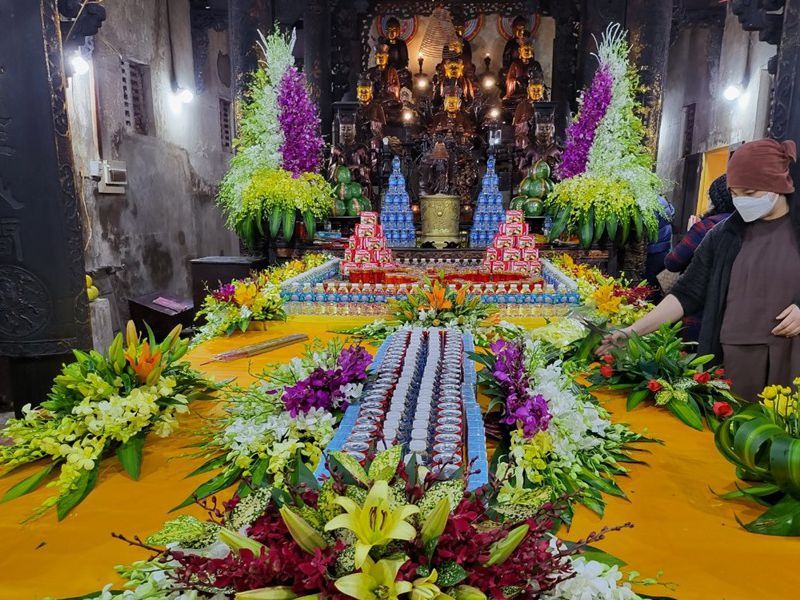
Phuc Khanh Pagoda, commonly known as So Pagoda, is located at 382 Tay Son Street, Hanoi. It is an ancient pagoda with a long history, closely connected to the development of Thang Long – Hanoi. Not only is it a place of Buddhist worship, but it also preserves valuable historical, architectural, artistic, and cultural heritage.
According to legend, Phuc Khanh Pagoda was built in the late Tran Dynasty on the land of So Village. At first, it was only a small pagoda built by local people for Buddhist worship. After many restorations and expansions, the pagoda gradually became larger and developed into the structure we see today.
During the early Le Dynasty, especially the Later Le Dynasty, So Pagoda was not only a place of worship but also became a school for training Buddhist monks and followers. This shows that the pagoda once played an important role in Buddhist life and contributed to the spread of Buddhist teachings.
Throughout its history, Phuc Khanh Pagoda experienced many historical events. According to some historical documents, in 1776, the pagoda was severely damaged by war and fire. Its Buddha hall, meditation halls, and foundations were destroyed. Later, a Buddhist monk from Tran Quoc Pagoda passed through the area. He was respected by the villagers and invited to stay as the pagoda’s abbot. The local people contributed their efforts and money and called on others to help rebuild the pagoda.
However, some other documents suggest that the pagoda was located in the area where the Battle of Dong Da took place in 1789, so it was destroyed during the conflict. After that, Monk Chieu Lien rebuilt the pagoda with the support of Admiral Tran Van Le during the Tay Son Dynasty. Although historical accounts differ about the exact cause of the damage, they all show that the pagoda went through a difficult period and was restored with the contributions of local people and Buddhist monks.
In terms of architecture, Phuc Khanh Pagoda features many traditional characteristics of Vietnamese Buddhist architecture. Its main gate has two floors, with a larger central entrance and two smaller side entrances. The upper part is designed as a bell tower. On both sides of the gate are two pillars decorated with traditional patterns and Chinese characters. At the top of each pillar is a decorative image of a crocodile-like creature facing inward, creating a solemn and ancient appearance.
Inside, the pagoda has an asymmetrical layout in the shape of the Chinese character “Cong”. Beyond the main gate is a brick-paved courtyard and the worship area. The front hall consists of five sections and features a traditional roof design. Behind it is the main sanctuary, which has three sections, while the ancestral worship house has four sections.
Besides its architectural value, Phuc Khanh Pagoda also preserves many valuable historical and artistic objects. There are 20 statues inside the pagoda, many of which date back to the Tay Son Dynasty and have significant artistic value. In addition, the pagoda houses 21 stone steles, with the oldest dating back to 1698, as well as 14 sets of decorated wooden panels, three large bronze bells, and many precious worship objects such as bronze incense burners, ceremonial thrones, and altars. Particularly noteworthy is a bronze bell cast in 1796, during the Tay Son period.
Because of its outstanding historical, architectural, and artistic values, Phuc Khanh Pagoda was officially recognized as a National Architectural and Artistic Heritage Site on November 16, 1988, by the Ministry of Culture and Information. This recognition highlights the cultural importance of the pagoda and the valuable heritage it has preserved over many centuries.
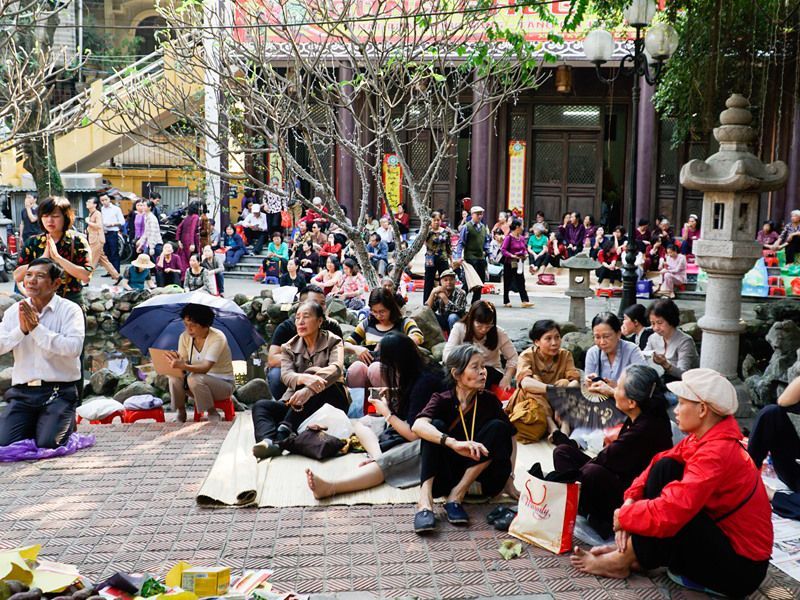
Besides its historical and architectural significance, Phuc Khanh Pagoda is also a famous spiritual destination for Hanoi residents. Every year, especially during festivals, Lunar New Year celebrations, and traditional Buddhist observance days, many people and Buddhists visit the pagoda to pray to Buddha, wish for peace, and express their hopes for themselves and their families.
One of the pagoda’s most important spiritual activities is the peace-praying ceremony, which is usually held on the 15th day of the first lunar month. Other important ceremonies include prayers for the deceased and the traditional ceremony known as “Sao Giai Han”, which is believed by some people to help reduce bad luck. These activities have become familiar religious traditions and attract many visitors from different parts of the country. The pagoda is also a place where families hold memorial ceremonies and pray for their deceased relatives to find peace in the afterlife.
Phuc Khanh Pagoda is not only an ancient Buddhist structure but also a place that preserves the historical and cultural values of Hanoi. Its long history, historical events, traditional architecture, statues, stone steles, bronze bells, and valuable worship objects all contribute to its special significance.
After many centuries, despite the rapid modernization and development of Hanoi, Phuc Khanh Pagoda continues to hold an important place in the spiritual life of local people. It is not only a testament to the development of Buddhism in ancient Thang Long but also an important site for preserving Vietnamese cultural traditions. Today, the pagoda remains a meaningful destination for those who wish to learn more about the history, culture, and spiritual heritage of Vietnam’s capital city.