The Mường are one of Vietnam’s major ethnic communities, with a population of more than 1.45 million according to the 2019 census. They live mainly in the mountainous regions of northern Vietnam, particularly in Hòa Bình, Thanh Hóa, Phú Thọ, and Sơn La. Closely related to the Vietnamese Kinh through their ancient Vietic roots, the Mường have developed a distinctive cultural identity shaped by their mountain environment, agricultural traditions, and long history of cultural exchange.
A Rich Cultural Heritage Shaped by Nature and History
Agriculture has traditionally been at the heart of Mường life. Wet-rice cultivation is the main livelihood, while corn, cassava, livestock, and forest products also contribute to household economies. The close relationship between the Mường people and their natural surroundings can also be seen in traditional crafts such as weaving, knitting, and reeling. These skills have been passed down through generations and remain an important part of their cultural heritage.
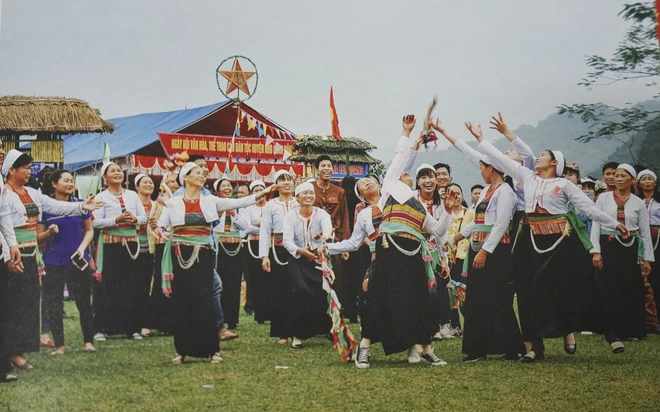
Traditional clothing varies among different Mường communities. Women’s clothing commonly consists of a tunic or robe, skirt, and headscarf, while men generally wear simple tunics and trousers. Some styles show influences from neighboring Thai communities, while others share similarities with traditional Vietnamese clothing. This diversity reflects the long history of cultural interaction in northern Vietnam.
Traditional houses, particularly stilt houses, are another characteristic feature of Mường communities. Designed to suit the mountainous environment, these houses serve not only as living spaces but also as important centers of family and community life. The village traditionally plays an important role in maintaining social relationships and cultural practices.
Language, Literature, Festivals, and Spiritual Life
The Mường language is closely related to Vietnamese and belongs to the Vietic branch of the Austroasiatic language family. It remains an important part of Mường identity and is commonly used in family and community life. The language also preserves a rich body of oral traditions, including traditional stories, songs, and epic narratives.
Among the most valuable examples of Mường oral literature are the mo epics, including Te tấc te đác, a traditional narrative concerning the origins of the Earth and Water. These works preserve the community’s historical memories, beliefs, and traditional understanding of the world.
Festivals and ceremonies are also an important part of Mường cultural life. New Year celebrations and agricultural festivals bring families and communities together, while traditional ceremonies often include prayers to ancestors and wishes for health, prosperity, and good harvests. Ancestor worship and animistic beliefs have traditionally played an important role in Mường spiritual life, reflecting a close connection between people, nature, and the spiritual world.
The cultural identity of the Mường is therefore expressed through a combination of language, agriculture, traditional crafts, clothing, architecture, oral literature, festivals, and spiritual beliefs. Together, these traditions form a living cultural heritage that continues to contribute to the rich ethnic diversity of Vietnam.