The Thổ are one of Vietnam’s Vietic-speaking ethnic communities, living mainly in the mountainous areas of western Nghệ An Province. With a history shaped by migration, cultural exchange, and long-term interaction among different Vietic-speaking communities, the Thổ have developed a rich cultural identity that combines elements of Vietnamese, Mường, and Thai traditions.
What makes Thổ culture particularly distinctive is this remarkable cultural diversity and interaction, which can be seen in their traditional clothing, houses, livelihoods, languages, and community life.
Thổ Culture: A Heritage Shaped by Cultural Exchange
The formation of the Thổ community was closely connected with historical movements and migrations among Vietic-speaking populations. Through generations of settlement and interaction with neighboring communities, the Thổ developed a culture containing several layers of cultural influence.
Vietnamese and Mường cultural elements can be found in various aspects of Thổ life, while Thai traditions have also had a significant influence, particularly in areas where the Thổ live alongside Thai communities.
As a result, Thổ culture is not entirely uniform across all localities. Different Thổ communities have developed their own characteristics, creating a diverse cultural landscape within the broader Thổ ethnic identity.
Traditional Clothing: A Reflection of Cultural Diversity
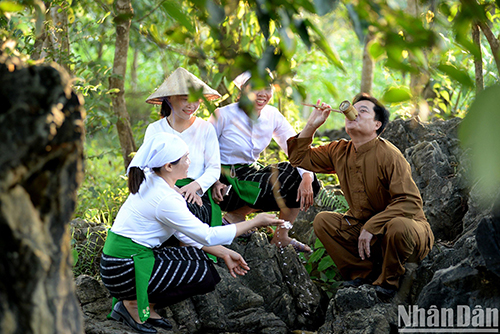
Traditional clothing is one of the most visible expressions of cultural exchange among the Thổ.
Thổ women’s clothing may share similarities with the áo bà ba and áo tứ thân, traditional forms of Vietnamese dress, while also incorporating skirts and headscarves. Some garments and accessories also reflect influences from Mường and Thai traditions.
In traditional life, natural fibers played an important role in clothing and household production. The cultivation of fiber-producing plants and the processing of these materials allowed local communities to make practical objects for everyday use.
Thổ clothing therefore represents more than appearance or practicality. It also reflects the long history of cultural interaction between the Thổ and neighboring ethnic communities.
Traditional Houses and the Influence of the Local Environment
Traditional housing is another distinctive feature of Thổ culture. The architecture of Thổ homes varies according to geographical location and local cultural interaction.
In some northern areas of Nghệ An, Thổ houses share characteristics with Mường stilt houses. Further south, however, traditional houses show stronger influences from Thai architectural traditions.
These differences demonstrate the Thổ people’s ability to adapt to their environment while incorporating cultural elements from surrounding communities. The traditional house was not simply a place to live; it was also an important part of family and community life.
An Agricultural Lifestyle Closely Connected to Nature
Traditional Thổ life has long been closely associated with agriculture and the natural environment. Rice cultivation has been an important livelihood, alongside the cultivation of fiber-producing plants such as ramie.
Natural fibers were traditionally processed into practical household items such as bags, hammocks, and nets. These practices demonstrate the community’s ability to make effective use of locally available resources.
The close relationship with farmland, forests, and agricultural activities has helped shape the Thổ people’s traditional way of life and community practices over generations.
Linguistic Diversity as an Important Part of Cultural Identity
Another remarkable feature of Thổ culture is its linguistic diversity.
The Thổ community consists of various local groups, and their languages are therefore not completely identical. These groups include Tày Poọng, Đan Lai, Cuối, Mọn, Họ, Kẹo, and others.
Some varieties are closely related to Mường languages, while others are very close to Vietnamese varieties spoken in Nghệ An. Tày Poọng and Đan Lai have also been studied as closely related varieties within the Vietic branch.
This linguistic diversity reflects the complex history of the Thổ community. Language is not merely a means of communication; it also preserves traces of historical migration, cultural contact, and interaction among different populations
A Distinct Identity Shaped by Cultural Interaction
One of the most fascinating aspects of Thổ culture is its ability to absorb and integrate different cultural influences.
Thổ culture contains similarities with Vietnamese traditions, connections with Mường culture, and elements influenced by Thai traditions. Yet these influences have not simply erased the community’s identity. Instead, they have contributed to the development of a distinctive cultural character.
Traditional clothing, houses, agricultural practices, and languages all tell part of the story of the Thổ people’s history and way of life. The diversity among different Thổ communities also shows that Thổ identity is not a single, uniform cultural form, but rather a multicolored cultural mosaic
Preserving the Cultural Heritage of the Thổ People
As modern life continues to transform traditional communities, preserving the cultural heritage of the Thổ people remains important. Their languages, traditional clothing, architecture, agricultural practices, and other cultural traditions form an important part of Vietnam’s rich ethnic diversity.
Thổ culture is fascinating not only because of its distinctive characteristics but also because of the story of cultural exchange that lies behind them. Over generations, interaction among different communities has created a cultural heritage that is both diverse and distinctive.
Thổ culture can therefore be seen as a fabric woven from many cultural threads—Vietnamese, Mường, Thai, and local traditions. Each thread contributes its own color and texture, creating a unique cultural identity within Vietnam’s rich tapestry of ethnic cultures.