
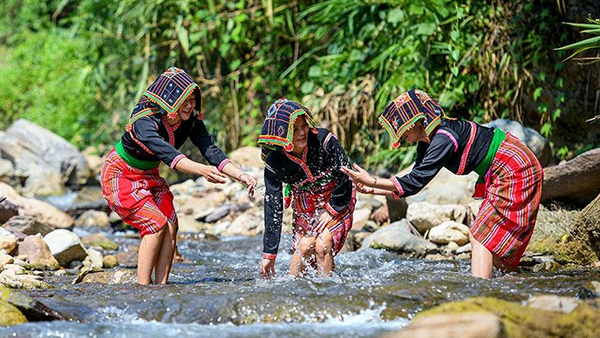
The Phunoi are a small ethnic community living in the mountainous regions of mainland Southeast Asia. Although their population is relatively limited, they have developed a distinctive cultural identity shaped by their highland environment, traditional beliefs, close-knit communities, and long-standing customs.
For generations, Phunoi communities have maintained a way of life closely connected to nature. Their villages, agricultural practices, family traditions, handicrafts, and spiritual beliefs all reflect a strong relationship with the mountains and surrounding forests.
Who Are the Phunoi?
The Phunoi are one of the ethnic groups found across the highlands of Laos and neighboring areas. Their communities have traditionally relied on agriculture and local natural resources for their livelihoods.
Phunoi society places great importance on family, community cooperation, and ancestral traditions. Daily life is often closely connected to the village, where people work together, celebrate important occasions, and pass cultural knowledge from one generation to the next.
Despite changes brought by modern life, many Phunoi communities continue to value their traditional identity and customs.
Where Do the Phunoi Live?
Phunoi communities are mainly found in the mountainous areas of northern Laos, particularly in remote districts surrounded by forests and valleys. Some related communities can also be found in neighboring regions of Southeast Asia.
The natural environment has played an important role in shaping Phunoi culture. Mountains, rivers, forests, and agricultural land are not simply part of the landscape but are closely connected to everyday life and traditional beliefs.
Because many villages are located in highland areas, local communities have developed agricultural methods suited to steep terrain and changing weather conditions.
Language and Cultural Connections
The Phunoi language belongs to the Tibeto-Burman language family and reflects the historical connections between different communities living across the mountainous regions of mainland Southeast Asia.
Language is an important part of Phunoi cultural identity. Through traditional stories, songs, conversations, and ceremonies, cultural knowledge has been passed down through generations.
However, like many minority languages, Phunoi faces challenges as younger generations increasingly use national and more widely spoken languages for education, employment, and communication outside their communities.
Family, Clans, and Ancestral Traditions
Family and community relationships are central to traditional Phunoi society. Different families and clans have their own histories, customs, and connections with their ancestors.
Respect for previous generations remains an important cultural value. Traditional ceremonies may involve offerings, prayers, and rituals intended to honor ancestors and maintain harmony between the living world and the spiritual realm.
These traditions also strengthen relationships within the community, bringing families together during important events and celebrations.
Traditional Agriculture
Agriculture has long been an essential part of Phunoi life. Depending on the local environment, communities have practiced forms of upland farming and cultivated a variety of crops for food and household use.
Rice is an important staple, while other crops may include maize, vegetables, beans, and local plants. Farmers have traditionally relied on knowledge of the seasons, soil, rainfall, and surrounding landscape.
Agriculture is more than an economic activity. It is closely connected with family life, community cooperation, seasonal traditions, and cultural practices.
Traditional Handicrafts
Handicrafts are another important expression of Phunoi culture. Traditional skills such as weaving, embroidery, basket-making, and other forms of handmade production have been practiced within communities for generations.
Clothing and textiles can carry cultural meaning through patterns, colors, and designs associated with local identity. Handmade objects are also useful in everyday life, showing how traditional knowledge combines practicality with artistic expression.
As modern products become more accessible, some traditional crafts are becoming less common. Nevertheless, artisans and local communities continue to preserve these skills as an important part of their cultural heritage.
Music, Stories, and Community Life
Traditional music and oral storytelling have played an important role in Phunoi communities. Songs and stories can preserve memories of ancestors, explain traditional values, and entertain people during community gatherings.
Festivals and ceremonies provide opportunities for people to come together, strengthen social relationships, and celebrate their shared identity.
For visitors, these cultural activities offer a meaningful glimpse into Phunoi life. Rather than being simply performances for tourists, they are part of a living tradition that remains connected to community life.
Tradition in a Changing World
Like many highland communities, the Phunoi are experiencing significant social and economic changes. Better access to roads, schools, technology, markets, and modern employment has created new opportunities, especially for younger generations.
At the same time, these changes can affect traditional lifestyles. Younger people may move away from their villages for education or work, while traditional languages, crafts, and customs may gradually become less familiar.
The challenge is therefore not simply to preserve the past, but to find ways for cultural traditions to remain meaningful in contemporary life.
Preserving Phunoi Cultural Heritage
Preserving Phunoi heritage requires the participation of local communities, families, cultural organizations, and younger generations.
Teaching traditional knowledge to children, maintaining the Phunoi language, supporting local crafts, documenting oral traditions, and encouraging respectful cultural tourism can all contribute to heritage preservation.
Tourism can also create opportunities for communities to share their culture and generate additional income. However, cultural tourism should be developed carefully, with respect for local customs and community choices.
A Living Highland Heritage
Phunoi culture is a reflection of a community that has adapted to life in the mountains while maintaining strong connections to family, nature, and tradition.
From agriculture and handicrafts to language, spiritual beliefs, music, and community celebrations, each element contributes to a distinctive cultural identity.
Today, the Phunoi continue to navigate the balance between tradition and modern life. Their heritage is not simply a record of the past—it remains a living part of their identity and an important cultural legacy of the highlands.