
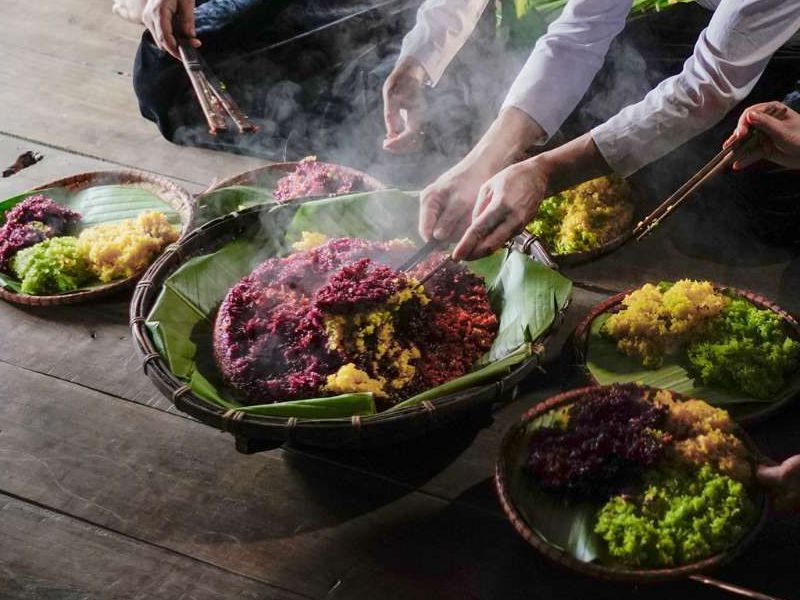
Five-color sticky rice from Northwest Vietnam is a traditional dish of ethnic communities in the mountainous region, attracting visitors with its vibrant colors and the fragrant, chewy texture of glutinous rice. More than a delicious local specialty, this dish reflects the region’s rich cultural heritage, traditional customs, and hopes for a happy and prosperous life.
What Makes Northwest Vietnam’s Five-Color Sticky Rice Special?
Five-color sticky rice is closely associated with the culinary traditions of several ethnic groups in northern Vietnam, particularly the Thai, Tay, and Nung people. Made from glutinous rice, the dish typically features five colors: red, yellow, green, purple, and white. These colors are created using natural ingredients such as gac fruit, turmeric, magenta leaves, and other locally available plants.
The Cultural Meaning Behind the Five Colors
In the traditional beliefs of some ethnic communities, the five colors are associated with the Five Elements philosophy, symbolizing harmony, good fortune, and prosperity. Each color carries its own meaning, often representing vitality, abundance, nature, and positive wishes. The specific interpretations may vary depending on local customs and traditions.
How Five-Color Sticky Rice Is Made
To prepare this dish, local cooks usually select fragrant glutinous rice with evenly sized grains and a naturally sticky texture. The rice is washed, divided into separate portions, and soaked in naturally colored water. Each portion is then steamed until tender, resulting in colorful, fragrant, and delicious sticky rice.
When Is Five-Color Sticky Rice Served?
Five-color sticky rice is commonly prepared for traditional Lunar New Year celebrations, festivals, weddings, and important cultural ceremonies. Beyond being a delicious dish, it reflects the cooking skills, hospitality, and good wishes of mountain communities.
Where Can You Enjoy Five-Color Sticky Rice in Northwest Vietnam?
Visitors traveling to Sa Pa, Son La, Dien Bien, Lai Chau, and other mountainous areas of northern Vietnam may find five-color sticky rice at local markets, traditional eateries, and community-based tourism villages.
The dish is often served with sesame salt, grilled meat, or chicken, creating a satisfying combination of flavors that allows visitors to experience the distinctive cuisine of the region.
A Taste of Mountain Culture
Northwest Vietnam’s five-color sticky rice is not only appealing for its natural colors and fragrant, chewy texture but also represents the region’s distinctive culinary heritage. During a journey through Northwest Vietnam, tasting this traditional dish offers visitors an opportunity to learn more about local customs, cuisine, and the daily lives of ethnic communities, making their travel experience even more memorable.