
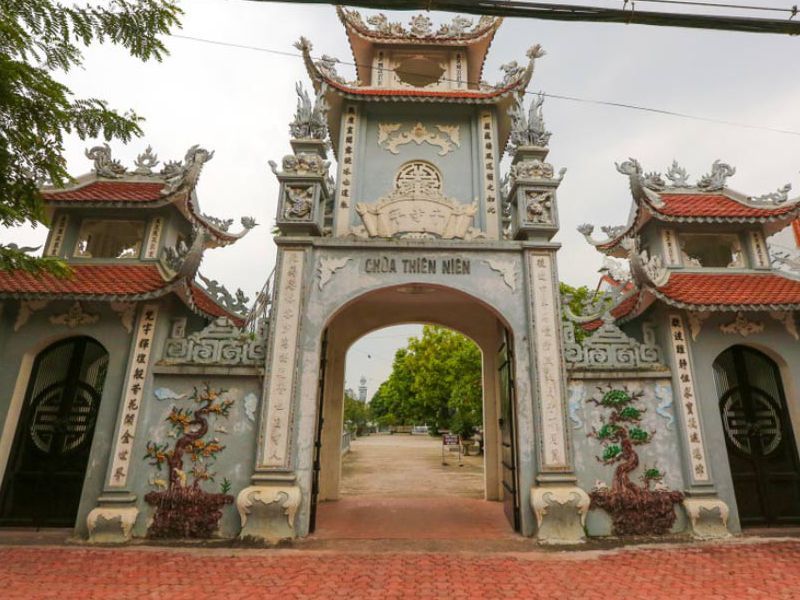
Thien Nien Pagoda, also known as Thien Nien Ancient Pagoda, is located in the historic Trich Sai village area on the shores of West Lake in Hanoi. Though not particularly large or imposing, the pagoda possesses a quiet, timeless charm and preserves many historical and cultural traces of the land west of the ancient Thang Long Imperial Citadel.
Over the centuries, Thien Nien Pagoda has served not only as a place of Buddhist worship for local residents but also as part of the cultural memory of the West Lake area. In 1992, the pagoda was officially recognized as a national architectural and artistic heritage site, acknowledging its historical, architectural, and cultural significance.
Origins and History of Thien Nien Pagoda
The history of Thien Nien Pagoda is closely connected with Trich Sai Village, one of the long-established settlements around West Lake. According to historical accounts and local traditions, the area has been inhabited and developed through many periods alongside the history of Thang Long and Hanoi.
The name Thien Nien is believed to have originated from the name of the ancient locality. The pagoda is also known as Trich Sai Pagoda because it is situated in the former Trich Sai village area.
Folklore surrounding West Lake has also contributed a mythical layer to the history of the pagoda and its surroundings. The area was once associated with stories of a mysterious and untamed landscape, including the famous legend of the nine-tailed fox of West Lake. Although these stories belong to the realm of folklore rather than documented history, they reflect the rich cultural traditions that have long surrounded West Lake.
As Trich Sai Village developed over time, Thien Nien Pagoda gradually became an important place of Buddhist worship and spiritual life for the local community.
Historical Traces in Stone Steles and Artifacts
One of the notable values of Thien Nien Pagoda lies in the historical artifacts that have been preserved there.
Among them are stone steles of historical significance, including one bearing the date the fifth year of the Vinh Thinh reign (1709). Such inscriptions provide valuable material for researchers studying the history of the pagoda as well as the religious and cultural life of communities around West Lake in earlier periods.
The pagoda also houses numerous Buddhist statues and religious sculptures dating from different periods. Its collection includes statues, ritual objects, horizontal lacquered boards, parallel sentences, wooden decorative panels, altars, wooden worship objects, and bronze artifacts.
Beyond their artistic value, these objects provide insight into traditional Vietnamese religious beliefs, craftsmanship, and spiritual life throughout different periods of history.
Traditional Vietnamese Buddhist Architecture
Thien Nien Pagoda reflects many characteristics of traditional Vietnamese Buddhist architecture. Its various structures are arranged harmoniously, creating an atmosphere that is both solemn and intimate.
Over the centuries, the pagoda has undergone several renovations, and its present appearance has inevitably changed from that of earlier periods. Nevertheless, many traditional elements have been preserved through its statues, decorative motifs, horizontal boards, parallel sentences, and worship spaces.
The pagoda is not particularly large, but its grounds offer a peaceful atmosphere. Tiled roofs, courtyards, trees, and Buddhist shrines create a striking contrast with the busy urban environment outside.
This is also one of the distinctive characteristics of many historic sites around West Lake: despite being surrounded by a rapidly developing urban area, they continue to preserve quiet spaces that evoke memories of old Hanoi.
Thien Nien Pagoda and the Culture of Trich Sai Village
The history of Thien Nien Pagoda cannot be separated from the history of Trich Sai Village and the wider West Lake area.
For centuries, communities around West Lake developed a variety of traditional occupations. The area was particularly associated with activities such as growing mulberry trees, raising silkworms, and producing silk. These traditional industries contributed greatly to the economic and cultural life of the villages around the lake.
Within the community, the pagoda served as a place where local people expressed their religious beliefs, prayed for peace and prosperity, and sought spiritual comfort. In this sense, the history of the pagoda also reflects an important part of the history of the people who have lived around West Lake for generations.
Cultural and Spiritual Significance
Today, Thien Nien Pagoda continues to welcome local residents and visitors who come to worship, explore the site, and learn about Hanoi’s heritage.
The value of the pagoda lies not only in its age or its collection of historic artifacts. More importantly, it forms part of the cultural landscape of West Lake, where natural scenery, ancient villages, folk beliefs, and Buddhism have existed side by side for generations.
Visitors to the pagoda can experience a fascinating transition between modern Hanoi and the traditional villages that once surrounded West Lake. Passing through the pagoda gate, the noise of the city seems to fade, replaced by a quiet and contemplative atmosphere.
Thien Nien Pagoda Today
After centuries of existence, Thien Nien Pagoda remains an important cultural and spiritual site for the local community. Its recognition as an architectural and artistic heritage site reflects not only its religious importance but also its value as a cultural heritage that deserves to be preserved.
Amid the rapid transformation of Hanoi, historic places such as Thien Nien Pagoda provide an opportunity to look back at the layers of history that have shaped the West Lake area.
A visit to the pagoda is therefore more than simply a religious or sightseeing experience. It is an opportunity to discover the history of an ancient village, learn about the spiritual traditions of Hanoi’s people, and appreciate the cultural values that have been preserved through generations.