
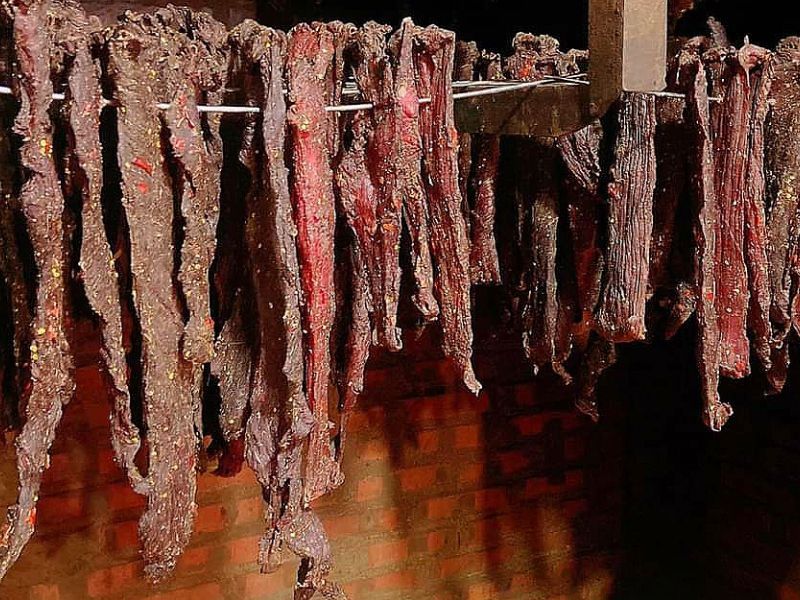
Behind the rising smoke of kitchen fires in traditional stilt houses across Northwest Vietnam lies the secret behind smoked buffalo meat, a specialty deeply rooted in the culinary traditions and cooking experience of the Thai ethnic people. With its distinctive smoky aroma blended with the fragrant spices of the mountains, this dish has become one of the region’s most representative culinary specialties. Beyond its unique flavor, smoked buffalo meat reflects the ingenuity of local communities in making use of available ingredients and preserving traditional cooking techniques.
To prepare smoked buffalo meat, local cooks usually select lean cuts, remove large tendons, and slice the meat into long strips along the grain. The meat is then marinated with a variety of spices, including mắc khén, mắc dổi, ginger, garlic, chili, and salt. Among these ingredients, mắc khén and mắc dổi are widely used in Northwest Vietnamese cuisine and contribute to the dish’s distinctive aroma. Once the seasonings have been absorbed, the strips are skewered or hung on racks above the kitchen fire, where they are slowly dried and smoked. This process requires patience and experience, as the cook must carefully control the heat and amount of smoke to dry the meat gradually while preserving its natural flavor.
The defining feature of smoked buffalo meat is the combination of the meat’s natural sweetness, the spicy warmth of local seasonings, and its characteristic smoky aroma. The finished product typically has a dark outer surface, firm fibers, and a rich fragrance. Before serving, the meat is often warmed and lightly pounded to soften the fibers, then pulled apart into thin strips. It is commonly enjoyed with chẩm chéo, a traditional dipping sauce of the Thai people made with local herbs and spices. The peppery, aromatic, slightly numbing sensation of mắc khén complements the smoky meat, creating a distinctive taste that captures the culinary character of Northwest Vietnam.
Behind this unique preparation method lies generations of accumulated knowledge and practical experience. In mountainous communities, drying and smoking meat were once useful ways to preserve it for longer periods than fresh meat could be kept. In traditional stilt houses, the kitchen rack served not only as a place for cooking but also as a space to dry and smoke food using the heat and smoke from the fire below. Over time, this preservation technique developed into a distinctive culinary tradition closely associated with the daily life and food culture of the Thai people in Northwest Vietnam.
Today, smoked buffalo meat has become a popular specialty among visitors exploring the mountainous provinces of northern Vietnam. It can be found in traditional meals served at homestays, local restaurants, and specialty stalls at highland markets. Thanks to its distinctive flavor and greater convenience for storage compared with fresh meat, it is also a popular choice for travelers looking for regional gifts. For visitors, tasting this dish offers more than a new culinary experience; it also provides an opportunity to learn about local customs, ingredients, and ways of life. When purchasing smoked buffalo meat, it is advisable to choose reputable producers that provide clear information about the product’s origin and storage conditions.
With its distinctive flavor, traditional preparation method, and close connection to community life, smoked buffalo meat has established a special place in the culinary landscape of Northwest Vietnam. The dish demonstrates how local people transform familiar ingredients into a specialty that reflects their cultural identity. Through every flavorful strip of meat infused with the aroma of wood smoke, generations of culinary knowledge continue to be preserved, helping introduce the rich food culture of Vietnam’s highlands to visitors from both Vietnam and around the world.