
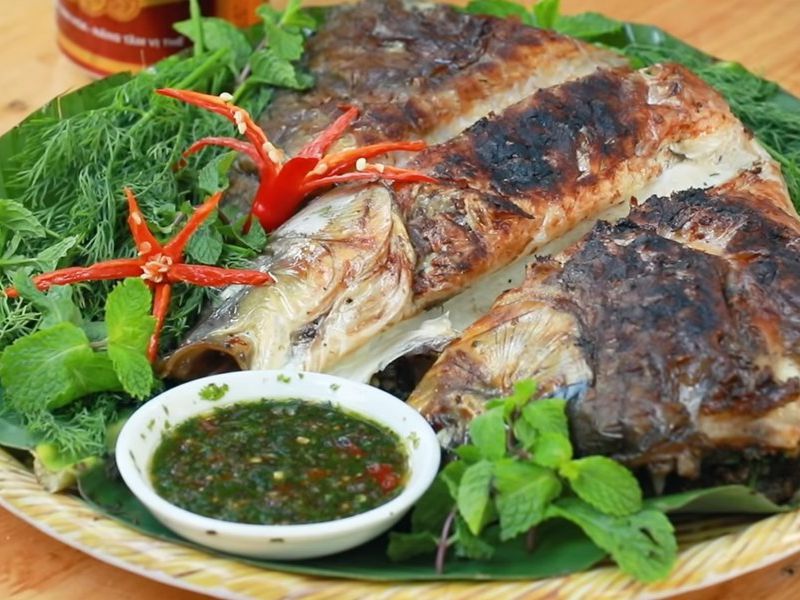
Among the rich culinary traditions of Vietnam’s Northwest region, pa pỉnh tộp is considered one of the most distinctive dishes, reflecting the skill and sophistication of the Thai people’s cuisine. This traditional grilled fish dish is renowned for its unique seasoning and special cooking technique. Beyond its appealing flavor, pa pỉnh tộp is closely connected to the daily life, customs, and hospitality of Thai communities in northern Vietnam, particularly in the provinces of Son La, Dien Bien, and Lai Chau.
The name “pa pỉnh tộp” comes from the Thai language and can be understood as folded grilled fish, describing the dish’s characteristic preparation method. Local cooks typically select fresh fish, often carp or other suitable freshwater varieties, then clean it and make shallow cuts along the body to help the seasonings penetrate the flesh. The filling usually includes mắc khén, local herbs, shallots, lemongrass, chili, and other regional spices. Among these ingredients, mắc khén is especially important for its distinctive aroma and mildly numbing, peppery taste, which contribute to the unique character of Northwest Vietnamese cuisine. After the fish is stuffed with the seasoned mixture, it is folded across its body, secured with bamboo sticks, and grilled over glowing charcoal.
What makes pa pỉnh tộp special is the harmonious combination of fresh ingredients, local spices, and traditional grilling techniques. During cooking, the fish must be carefully turned and the heat controlled to ensure that it cooks evenly, allowing the skin to become golden and fragrant while the flesh remains tender, moist, and naturally sweet. The aroma of herbs and spices blends with the smoky scent of charcoal, creating an irresistible appeal. When tasting the dish, diners can enjoy the natural sweetness of the fish, the heat of chili, and the distinctive fragrance of mắc khén and local herbs. Pa pỉnh tộp is often served with sticky rice, steamed rice, or other traditional dishes, creating a meal rich in the flavors of the mountains and forests.
Beyond being a delicious specialty, pa pỉnh tộp reflects the Thai people’s understanding of local ingredients and the culinary knowledge passed down through generations. Every stage of preparation, from selecting the fish and combining the spices to grilling it over charcoal, requires care, experience, and a refined sense of flavor. Familiar ingredients found in the local environment are brought together in a distinctive way, creating a dish that is both comforting and deeply rooted in cultural identity. During festivals, family gatherings, and special occasions when guests are welcomed into the home, traditional dishes such as pa pỉnh tộp also express the host’s thoughtfulness and hospitality.
Today, pa pỉnh tộp has become one of the specialties that many visitors seek out when traveling to Vietnam’s Northwest region. The dish can be found in ethnic cuisine restaurants, homestays, and traditional meals prepared in local villages, offering travelers an authentic taste of regional food culture. Enjoying pa pỉnh tộp is not simply a culinary experience; it is also an opportunity to learn more about the customs, traditions, and way of life of the Thai people. For travelers who enjoy discovering regional specialties, this grilled fish dish is well worth trying when exploring Vietnamese cuisine.
With its distinctive flavor, unique preparation method, and deep cultural significance, pa pỉnh tộp deserves recognition as a culinary treasure of the Thai people in Vietnam’s Northwest. The dish demonstrates how local communities transform familiar ingredients into a specialty that reflects the identity of their homeland. Through every fragrant fish grilled over glowing charcoal, pa pỉnh tộp preserves traditional flavors and helps introduce the rich cultural heritage of Vietnam’s highlands to visitors from both Vietnam and around the world.