
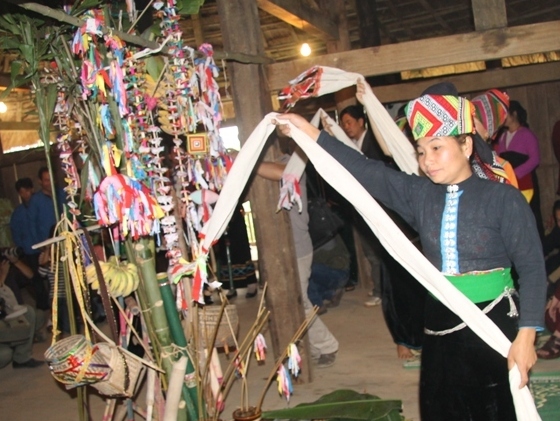
Some communities are remembered not only through their population or place of residence, but also through stories passed down from one generation to the next. The history of the La Ha is one such story—shaped by shifting political power in the northwestern highlands, the movement of different communities, and traditional rituals that continue to hold meaning today.
With a population of 10,157 recorded in the 2019 census, the La Ha are one of Vietnam’s smaller ethnic groups. They live mainly in Sơn La and Yên Bái and speak the La Ha language, which belongs to the Tai–Kadai language family. Despite generations of change, they have preserved distinctive cultural traditions, from historical memories to the Pang A Nụn Ban Festival and traditional knowledge of healing.
A Community Shaped by Northwestern History
The historical homeland of the La Ha lies in the northwestern highlands, a region long inhabited by different Tai-speaking communities. Over time, these groups developed relationships shaped by both cultural exchange and political competition.
One of the most notable stories is recorded in the Black Tai Chronicle, which tells of a struggle between the La Ha and the Black Tai for control of Muang Mouay in the Red River valley.
The story offers a glimpse into a period when political power in the highlands could shift through warfare, alliances, marriage, and betrayal.
Am Poi and the Struggle for Power
According to the chronicle, the La Ha chief Am Poi, also known as Khoun Piên, resisted the Black Tai for a long time. Eventually, the Black Tai leader Lang Cheuang sought another way to approach him by proposing marriage to Hao, Am Poi’s daughter.
The wedding later became the setting for a carefully planned betrayal. Distrusting the Black Tai, Am Poi arrived with fifty bodyguards. During the feast, however, the guards were persuaded to put down their weapons, while Am Poi was made drunk and eventually killed.
The surviving La Ha fled as the Black Tai took control of the Red River valley.
Whether understood as a historical account or a traditional chronicle, the story reflects the political upheavals that once shaped relationships between communities in the northwestern highlands.
Pang A Nụn Ban: Honoring Traditional Healers
If historical stories preserve memories of the past, traditional rituals show how La Ha cultural values continue to live in the present.
The Pang A Nụn Ban Festival is held to express gratitude to traditional healers and the knowledge of healing passed down through generations. During the celebration, the community prepares offerings such as bitter bamboo and Mạ Rệ flowers, plants traditionally associated with folk medicine.
The festival is more than an expression of gratitude. It also reflects a traditional understanding of health in which people, nature, healing knowledge, and the spiritual world are closely connected.
When Culture Lives Through Memory
For the La Ha, culture is preserved through more than physical objects. It also lives in stories, knowledge, rituals, and traditions shared within the community.
From the story of Am Poi to the Pang A Nụn Ban Festival, each layer of memory contributes to the way the La Ha understand their history, their community, and their relationship with the world around them.
The La Ha Today
Today, the La Ha continue to live mainly in Sơn La and Yên Bái. Modern life has brought changes in education, economic opportunities, and daily activities, yet traditional values remain an important part of La Ha identity.
The La Ha may be small in number, but the stories they preserve add a distinctive piece to the cultural landscape of northwestern Vietnam—a region where history does not exist only in written records, but continues to live through rituals, memories, and the lives of people today.