
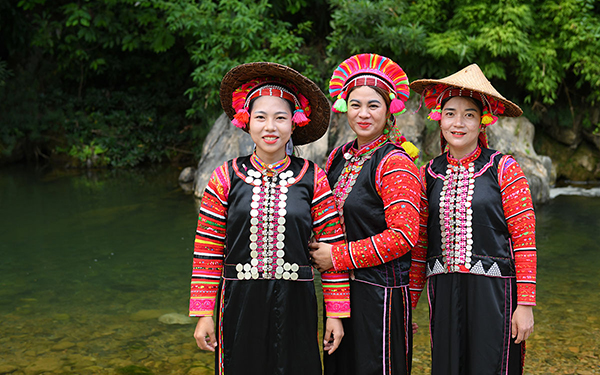
Distribution and Communities
The Lahu are an ethnic minority group living mainly in China, Myanmar, Thailand, and Vietnam. In China, they are primarily concentrated in Yunnan Province, especially in the Lancang area. In Vietnam, the Lahu mainly live in Muong Te District, Lai Chau Province. The Lahu are divided into several groups, including the Lahu Na (Black), Lahu Nyi (Red), Lahu Hpu (White), Lahu Shi (Yellow), and Shehleh.
Language
The Lahu language belongs to the Loloish branch of the Tibeto-Burman language family. It mainly follows a Subject–Object–Verb (SOV) word order and has seven tones. Today, the Latin alphabet is commonly used to write Lahu. Lahu Na is also widely used as a means of communication among different Lahu communities.
Religion and Spiritual Beliefs
Traditional Lahu beliefs are closely associated with animism and the belief in spirits existing in nature. Mountains, rivers, forests, and natural phenomena all have spiritual significance. In addition to traditional beliefs, some Lahu communities have adopted Buddhism and Christianity. These different religious influences have contributed to the diversity of Lahu spiritual life.
Names and Naming Traditions
Lahu names often reflect gender, the day of birth, and traditional cultural beliefs. In some communities, people also use surnames influenced by the Chinese naming system. Naming is not only a way to identify individuals but also reflects their connections with family and the wider community.
Culture and Way of Life
The Lahu have a way of life closely connected to mountainous environments and nature. Family and community play important roles in their social life. Some Lahu communities traditionally practice matrilocal residence, in which a married couple lives with or near the wife’s family. Kinship can also be recognized through both the paternal and maternal sides.
Traditional clothing, customs, music, and community ceremonies are important elements of Lahu cultural identity. In modern society, the Lahu continue to preserve their traditions while adapting to social changes.
The Journey of Preserving Cultural Identity
Lahu cultural identity is expressed through their language, beliefs, customs, traditional clothing, and community life. Preserving the Lahu language, passing traditional customs on to younger generations, and maintaining cultural practices are important ways of protecting their heritage.
As modernization and cultural exchange continue to grow, preserving traditional values allows the Lahu to maintain their unique cultural identity. At the same time, their traditions contribute to the rich cultural diversity of Southeast Asia.