
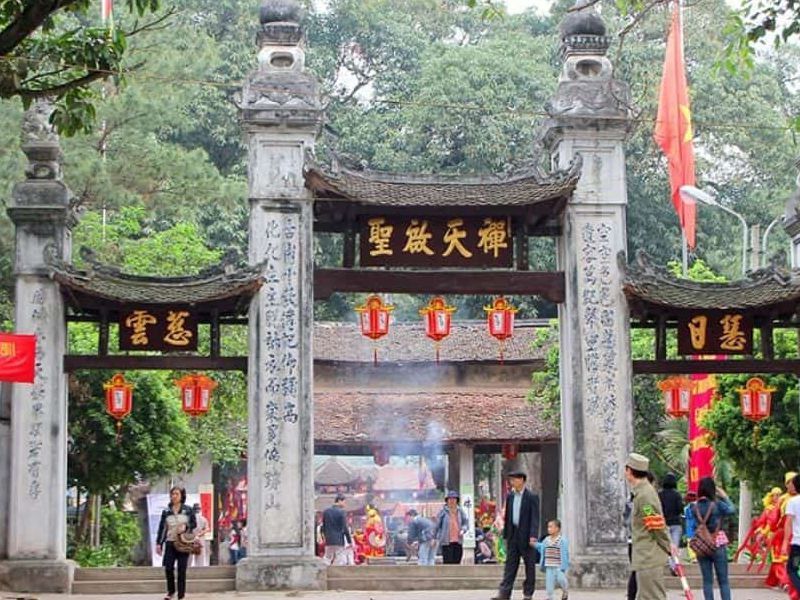
Lang Pagoda, also known by its Sino-Vietnamese name, Chieu Thien Tu, is one of the most famous ancient pagodas in Hanoi. Located on Chua Lang Street, the pagoda is closely associated with the history of Vietnamese Buddhism and the legends of Zen Master Tu Dao Hanh. With a long history, Lang Pagoda is not only a place of religious worship but also a historical site of great architectural, artistic, and cultural value.
According to historical records, the pagoda was built during the reign of King Ly Anh Tong in the 12th century. It is closely connected with the life and religious practice of Zen Master Tu Dao Hanh, a well-known figure in the history of Vietnamese Buddhism. In addition to worshipping Buddha, the pagoda also honors Zen Master Tu Dao Hanh and King Ly Than Tong. Over the centuries, despite numerous restorations and renovations, Lang Pagoda has preserved its ancient appearance and valuable historical heritage.
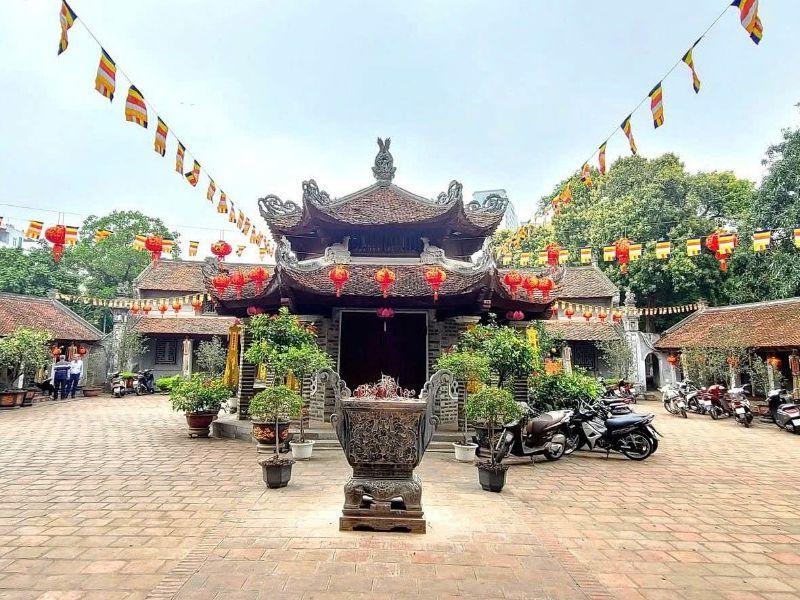
Architecturally, Lang Pagoda impresses visitors with its spacious grounds, peaceful atmosphere, and harmonious arrangement of buildings. From the entrance gate, visitors walk into a large courtyard, where the distinctive octagonal pavilion stands out. Other structures, including the front hall, central hall, main sanctuary, and surrounding corridors, follow the traditional architectural style of pagodas in the Red River Delta. Curved tiled roofs, wooden pillars, intricate carvings, and sacred statues contribute to the solemn and ancient beauty of the entire complex.
In addition to its architectural significance, Lang Pagoda preserves many historically and artistically valuable objects, such as stone steles, bronze bells, bronze plaques, horizontal lacquered boards, parallel sentences, and statues. These artifacts reflect the religious life, sculptural traditions, and cultural heritage of the Vietnamese people throughout different historical periods. In particular, the relics associated with Zen Master Tu Dao Hanh highlight the pagoda’s important role in the history of Vietnamese Buddhism and the spiritual life of the people of ancient Thang Long.
Another distinctive feature of Lang Pagoda is its traditional festival, which takes place annually in the third lunar month to commemorate Zen Master Tu Dao Hanh. The festival includes incense-offering ceremonies, traditional rituals, and various folk cultural activities that reflect the local identity. It is not only an occasion for local people to express their respect for their ancestors but also an opportunity to preserve and pass down traditional customs and cultural values to future generations.
Today, amid the bustling pace of life in the capital, Lang Pagoda retains its tranquil atmosphere and ancient charm. It serves as a place where local residents and Buddhists come to worship Buddha and pray for peace and good fortune. At the same time, it is an appealing destination for those interested in history, architecture, and traditional culture. The presence of Lang Pagoda in the heart of Hanoi contributes to the city’s rich and diverse cultural landscape.
With its long history, distinctive architecture, and profound spiritual significance, Lang Pagoda is a precious cultural heritage site of Hanoi. It preserves not only the legacy of Vietnamese Buddhism but also reflects the close connection between spiritual life, history, and national culture. Preserving and promoting the values of Lang Pagoda is an important way to safeguard the traditional beauty of Thang Long for future generations.