
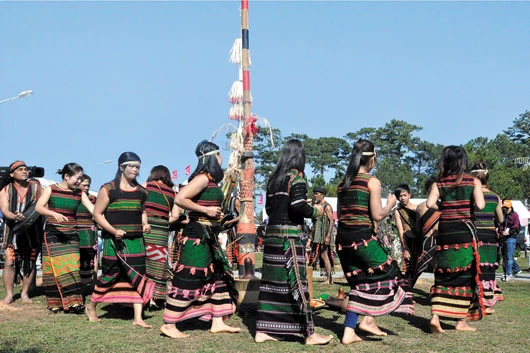
The Mnong, also known as M’nong or Bunong, are an ethnic group mainly living in Vietnam’s Central Highlands and parts of Cambodia. With several local groups and language varieties, the Mnong people have a rich and diverse cultural heritage.
The Meaning of Ot N’rong
One of the most important traditions of the Mnong people is Ot N’rong, a form of traditional epic storytelling. The name refers to telling ancient stories through singing. These epics preserve the community’s history, beliefs, customs, and traditional values.
Some Mnong epics are very long and tell stories about villages, farming, community life, and relationships with nature. They were traditionally passed down orally from older generations to younger ones through skilled epic tellers.
Famous Figures and Cultural Preservation
The history and culture of the Mnong are associated with notable figures such as Y Thu Knul, who became famous for elephant hunting and taming, and N’Trang Lơng, a leader who resisted French colonial forces in the early twentieth century.
Cultural researchers and folk artists such as Điểu Kâu, Điểu Klứt, and Điểu Klung also played an important role in collecting and preserving Mnong epics.
Preserving Mnong Heritage
Today, modernization presents challenges to traditional oral storytelling. Recording epics, supporting traditional storytellers, and encouraging young people to learn about their heritage are important ways to keep Ot N’rong alive.
More than just ancient stories, Ot N’rong is a living expression of Mnong identity and collective memory. Preserving this tradition means protecting an important part of Vietnam’s rich cultural diversity.