
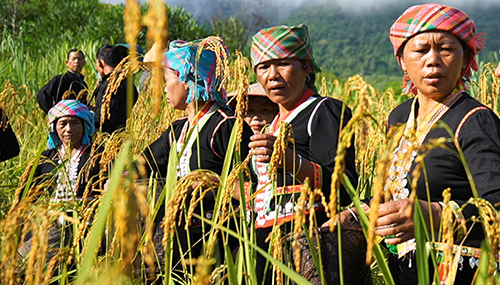
The Khmu are one of the long-established ethnic communities of Southeast Asia, living mainly in Laos, Vietnam, Thailand, and parts of China. Over generations, they have developed a distinctive culture shaped by mountain landscapes, village life, and strong community ties.
A Journey of Formation and Development
The Khmu have a long history of settlement in the northern part of mainland Southeast Asia. Today, the largest Khmu population lives in northern Laos, particularly in provinces such as Luang Prabang, Phongsaly, Oudomxay, and Luang Namtha. In Vietnam, Khmu communities are mainly found in the northern mountainous regions and the North Central Coast.
Throughout their history, the Khmu have interacted with neighboring ethnic groups. Changes in geography, society, and migration have contributed to differences in dialects, customs, and ways of life among Khmu communities in different areas.
Life Among the Mountains
Mountains and forests have long played an important role in Khmu life. Traditional livelihoods have included shifting cultivation, livestock raising, hunting, and gathering.
The natural environment has provided not only food and resources but also influenced how Khmu communities organize their villages and maintain traditional practices. Their close relationship with nature remains an important part of their cultural identity.
Language and Cultural Identity
Khmu belongs to the Austroasiatic language family, within the Khmuic branch. Because Khmu communities live across different regions and have maintained long-standing contact with neighboring peoples, the language has developed several dialects.
Language serves not only as a means of communication but also as a way to preserve memories, customs, and cultural knowledge passed down through generations.
A Culture That Adapts Over Time
As modern society continues to change, the traditional lifestyle of the Khmu has also evolved. Nevertheless, community values, language, and cultural traditions remain important to their identity.
Preserving the Khmu language, customs, and traditional knowledge can help younger generations understand their heritage while allowing Khmu culture to continue developing in contemporary life.
A Distinctive Culture of Southeast Asia
From remote mountain villages to communities across several countries, the Khmu carry a cultural heritage shaped by a long history. Their distinctive language, livelihoods, and community traditions add another unique dimension to the rich cultural diversity of Southeast Asia.