
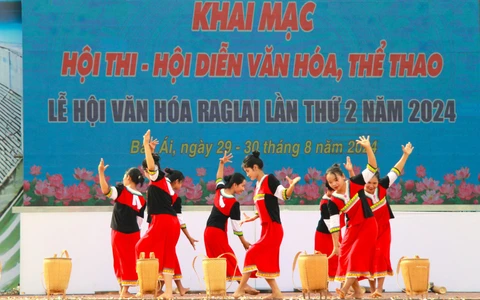
The Raglai are one of Vietnam’s ethnic minority communities with a long history in the South-Central region. They live primarily in Ninh Thuan, Khanh Hoa, and Binh Thuan provinces. With their distinctive language, customs, beliefs, music, and community traditions, the Raglai contribute to the rich cultural diversity of Vietnam.
According to the 2019 population census, there were approximately 146,613 Raglai people in Vietnam. The Raglai language belongs to the Malayo-Polynesian language group. The name “Raglai” is associated with the meaning “forest” in their language, reflecting the community’s long-standing connection with the mountainous landscapes where they have traditionally lived.
A Long History and Close Ties with the Cham People
The Raglai have inhabited the mountainous areas west of Ninh Thuan, Khanh Hoa, and Binh Thuan for generations. Their traditional homeland lies close to the coastal plains where the Cham people have historically lived. This geographical proximity has contributed to a deep historical and cultural relationship between the two communities.
An old saying, “Cam sa-ai Raglai adei,” is commonly understood as meaning “The Cham are the elder sister, and the Raglai are the younger sibling.” The saying reflects the close historical and cultural connections between the Cham and Raglai peoples.
Throughout history, the Raglai have been known by various names, including Rànglai, Ràglai, Ràdlai, Rơglai, Ràng-chơk, and Ràng-ngơk. Historical records from the Nguyen dynasty also referred to them as “mọi Lá Vàng.” Such historical names should be understood within the context of their respective periods and do not necessarily represent how the Raglai people identify themselves.
For a long time, the Raglai were sometimes considered closely related to the Cham because of similarities in language, clothing, and certain customs. Over time, however, the Raglai developed and maintained their own distinctive cultural identity, with unique beliefs, rituals, and traditions.
By the late 20th century, greater attention was given to the study and recognition of the Raglai as a distinct ethnic community. Today, the Raglai are officially recognized as one of Vietnam’s ethnic minority groups and are entitled to policies supporting ethnic minority communities.
A Distinctive Culture Shaped by the Mountains
One of the most distinctive characteristics of Raglai culture is its strong connection with nature and the surrounding mountains and forests. Traditional customs, rituals, and community activities reflect the Raglai people’s understanding of their ancestors, family, community, and the natural world.
Ancestor worship holds an important place in their spiritual life. Traditional beliefs and ceremonies not only have religious significance but also help strengthen connections between generations and preserve the community’s cultural heritage.
Music is another essential part of Raglai cultural life. The sounds of gongs, stone instruments, and traditional string and wind instruments are often associated with community gatherings, ceremonies, and festivals.
Music – The Voice of the Community
The Raglai possess a rich musical heritage featuring a variety of traditional instruments, including stone instruments, gongs, the dan nhi, the kèn bầu, and the Chapi.
These instruments serve purposes beyond entertainment. They provide ways for the Raglai to express emotions, tell stories, communicate with one another, and preserve memories and traditions passed down through generations.
Among these instruments, the Chapi has become one of the best-known symbols associated with Raglai culture. Its simple and distinctive sound is closely connected with the spiritual and everyday life of people in the mountainous areas of Ninh Thuan. The Chapi has also helped introduce Raglai music to a wider Vietnamese audience.
Today, Raglai music continues to appear in cultural performances, artistic programs, and activities promoting Vietnam’s ethnic heritage. Raglai artists and traditional musicians are also playing an important role in bringing this heritage closer to younger generations.
People Who Shaped Raglai History
Throughout modern history, a number of Raglai individuals have made significant contributions to their communities and local society.
One notable figure was Pinăng Tắc (Ama Tắc, 1910–1987), a revolutionary activist and soldier from Ninh Thuan. He played an important role in organizing and leading Raglai people during the wartime period.
In recognition of his contributions, Pinăng Tắc was awarded the title of Hero of the People’s Armed Forces on May 5, 1965.
Preserving Raglai Heritage in the Modern Era
As modernization continues, the Raglai community faces the challenge of developing economically and socially while preserving its traditional cultural values. Their language, music, festivals, handicrafts, oral traditions, and rituals are all important elements of Raglai identity.
Preserving Raglai culture is important not only for the Raglai themselves but also for maintaining Vietnam’s broader cultural diversity. Cultural research, education, traditional music training, and heritage promotion are creating new opportunities for these traditions to be passed on to future generations.
From villages nestled among the mountains of South-Central Vietnam to modern cultural stages and heritage programs, Raglai culture continues to tell its own story. It is a story of a community with a long history, a rich spiritual life, and a distinctive cultural identity preserved and passed down through generations.