
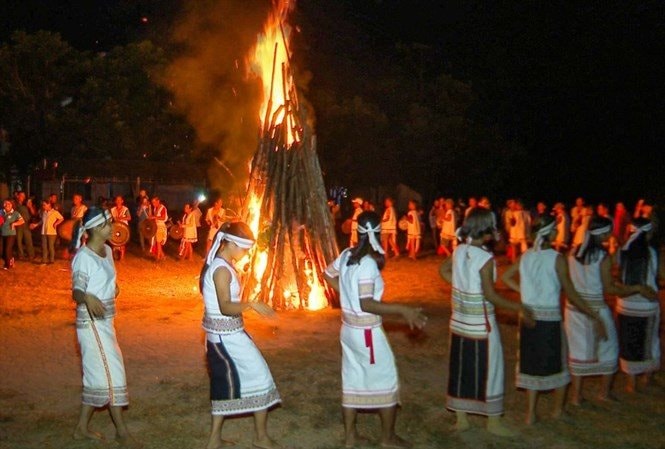
The Rơ-măm are one of Vietnam’s smallest ethnic communities, with a population of 639 according to the 2019 census. They live mainly in Le Village, Mo Rai Commune, Kon Tum Province, in a mountainous area shaped by forests and the wider Central Highlands landscape.
Life Shaped by the Forest
The Rơ-măm speak the Rơ-măm language, which belongs to the Central Bahnaric branch of the Mon–Khmer language family. Traditionally, the surrounding natural environment has played an important role in their daily lives, providing both food resources and opportunities for cultivation.
Hunting and gathering were once important ways of making use of the forest’s resources. Agriculture has also become an essential part of community life, providing food and supporting more stable livelihoods.
Weaving as Part of Everyday Life
Weaving is one of the traditional crafts associated with the Rơ-măm. Beyond producing clothing and other everyday items, textile making reflects the community’s craftsmanship and cultural knowledge.
Using familiar natural materials, Rơ-măm women create handwoven products that demonstrate their skills while contributing to the distinctive character of the community’s material culture.
A Small Community with Distinctive Values
Although the Rơ-măm population is small, their cultural traditions form a meaningful part of Vietnam’s rich ethnic diversity. Activities such as farming, hunting, gathering, and weaving are not only sources of livelihood but also carry practical knowledge passed down through generations.
Today, learning about and supporting Rơ-măm cultural values can help keep the story of this small community visible within the diverse cultural landscape of Vietnam’s Central Highlands.