
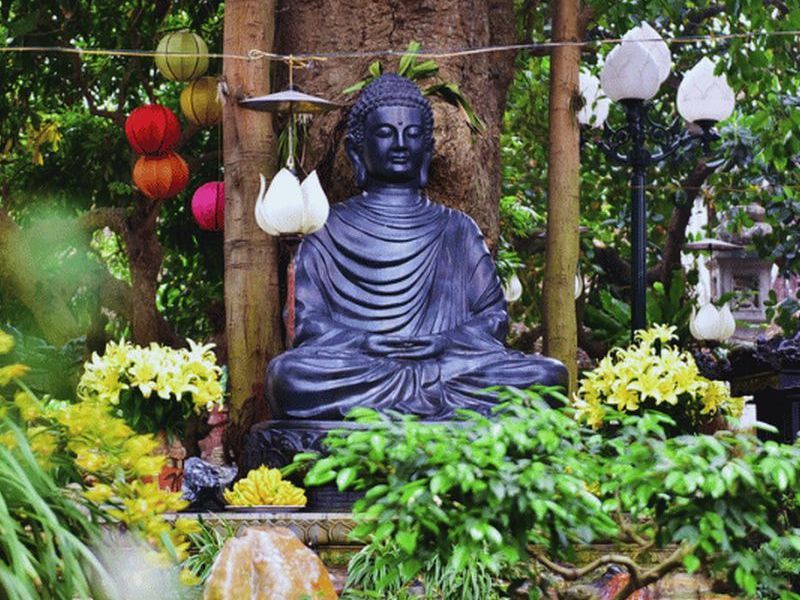
Van Nien Pagoda is one of Hanoi’s ancient Buddhist temples, located on the western shore of West Lake. With a history spanning more than a thousand years, the pagoda is not only a place of worship but also a valuable historical and cultural landmark that reflects the development of Vietnamese Buddhism.
According to historical accounts, Van Nien Pagoda dates back to the Ly Dynasty, a period when Buddhism flourished in Vietnam. The pagoda is believed to have been established in 1011, during the reign of King Ly Thai To, shortly after he moved the capital from Hoa Lu to Thang Long, present-day Hanoi. Some historical records also mention the pagoda in connection with Buddhist ordination activities in 1014, highlighting its significance in the religious life of the early Thang Long capital.
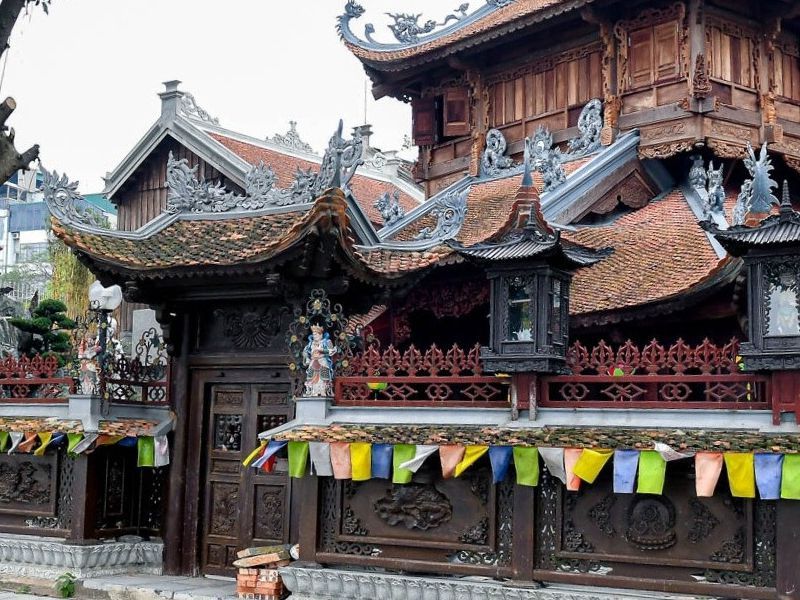
Over the centuries, Van Nien Pagoda has undergone several restorations and renovations. Despite the passage of time, it has retained its spiritual importance and continues to preserve traces of different historical periods. Its traditional Vietnamese Buddhist architecture features a three-entrance gate, worship halls, ancestral halls, and wooden structures adorned with intricate decorative details.
Beyond its architectural beauty, the pagoda preserves various religious and historical artifacts, including Buddhist statues, bronze bells, and traditional worship objects. The presence of both Buddhist worship and the veneration of Mother Goddess Liễu Hạnh reflects the harmonious coexistence of different spiritual traditions in Vietnamese culture.
Today, Van Nien Pagoda remains a peaceful spiritual destination where visitors can pray, admire traditional architecture, and learn about Hanoi’s cultural heritage. In 1996, the pagoda was recognized as a National Historical and Cultural Relic by Vietnam’s Ministry of Culture and Information.
With its rich history, distinctive architecture, and tranquil setting beside West Lake, Van Nien Pagoda stands as a meaningful symbol of Hanoi’s spiritual and cultural heritage. Preserving this ancient pagoda helps safeguard the traditions and historical memories of Vietnam for future generations.