
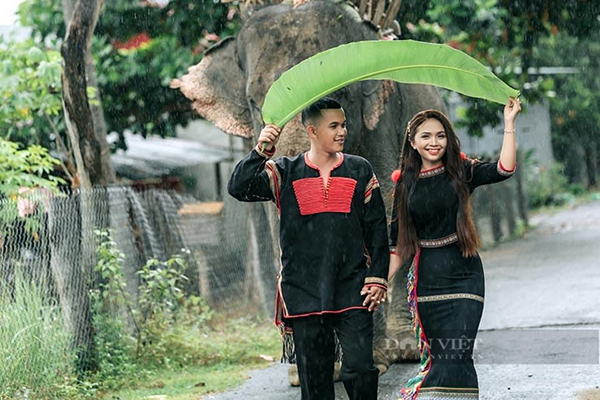
The Ede people are one of the indigenous communities of Vietnam’s Central Highlands, with a strong cultural presence especially in Dak Lak and surrounding areas. Their identity is reflected in traditional family structures, distinctive longhouses, epic storytelling, and the powerful sounds of gong music.
Traces of Ede Origins and Language
The Ede have historical and cultural connections with other Chamic-speaking communities, including the Cham. Their language belongs to the Malayo-Polynesian branch of the Austronesian language family.
Traditional Ede names also reflect cultural customs. Women’s names are often preceded by H’, while men’s names may begin with Y-. The surnames Niê and Mlô are common, and family names have traditionally been passed through the mother’s side.
Family Life and the Matrilineal Tradition
One of the most distinctive features of Ede society is its matrilineal system. Family lineage is traced through the mother, and traditionally, important property is inherited by women.
After marriage, the husband usually moves into his wife’s family home. This tradition strengthens the role of women within the household and maintains close relationships among members of the maternal lineage.
Longhouses – The Heart of Community Life
The traditional Ede longhouse is more than a place to live. Built mainly from wood and bamboo, it provides a shared space for several generations of a family.
A longhouse can be extended when a daughter marries, allowing her husband to join the household. This reflects the importance of family and matrilineal traditions in Ede society.
The longhouse is also a symbol of community identity. Its impressive length has inspired the traditional saying: “As long as the echo of a gong.”
Stories Passed Down by Firelight
The Ede have a rich oral tradition, especially through khan, a form of epic storytelling. Skilled storytellers perform long narratives about heroes, love, family, community life, and traditional values.
These stories were traditionally told around the fire, sometimes lasting through the night. Beyond entertainment, they helped younger generations understand the history, beliefs, and moral values of their community.
The Sounds That Shape Ede Culture
Music plays an important role in Ede cultural life. Gong ensembles, flutes, and traditional string instruments are used during ceremonies, celebrations, and community gatherings.
Instruments such as đing, k’ni, and goong contribute to the distinctive sound of Ede music. Gong performances are closely connected with community life and traditional spiritual beliefs.
The gong culture of Vietnam’s Central Highlands has also been recognized by UNESCO as part of the region’s important intangible cultural heritage.
The Ede People in Wartime
During the Vietnam War, some Ede people served alongside U.S.-supported forces, including units connected with the Civilian Irregular Defense Group (CIDG). Their knowledge of the Central Highlands landscape, local communities, and environment made them valuable to military operations.
In 1964, tensions involving Rhade communities contributed to an uprising in the Buon Ma Thuot area. After the war, some Ede people left Vietnam and settled abroad, including communities in the United States.
Keeping Ede Heritage Alive
Today, the Ede continue to preserve many elements of their traditional culture, including matrilineal customs, longhouses, epic storytelling, gong music, and traditional instruments.
Although modern life has brought many changes, these traditions remain important symbols of Ede identity. From the architecture of the longhouse to the deep resonance of gongs, Ede culture continues to contribute to the rich and diverse heritage of Vietnam’s Central Highlands.