
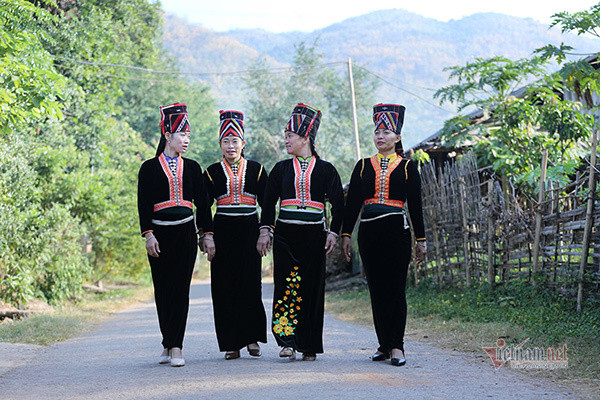
Far from the busy cities, the mountains of northwestern Vietnam are home to many ethnic communities, each with its own traditions and ways of life. Among them are the Kháng people, an Austroasiatic ethnic group whose cultural identity has been shaped by generations of living in the mountainous landscapes of Sơn La and Lai Châu.
With distinctive culinary traditions, community celebrations, and customs rarely found elsewhere, the Kháng offer travelers an opportunity to discover a quieter and less familiar side of Vietnam.
A Taste of Kháng Life
Food provides one of the most natural ways to encounter a culture, and Kháng cuisine has its own distinctive character.
Traditional Kháng dishes are known for their hot and sour flavors, reflecting local culinary habits and the use of ingredients available in the surrounding mountain environment.
For travelers visiting Kháng communities, local food can be more than a meal. It can become an introduction to the community’s everyday life, hospitality, and relationship with the surrounding landscape.
An Unusual Tradition of Hospitality
Among the customs associated with the Kháng people is “drinking by the nose,” known in the Kháng language as tu mui.
The custom is particularly distinctive because it differs considerably from common drinking practices elsewhere in Vietnam. It represents one of the many cultural details that make the Kháng heritage fascinating to explore.
Rather than simply observing such traditions as curiosities, visitors can learn about their cultural context through local hosts or community guides.
Xen Pang Ả – When the Community Comes Together
Festivals are an important part of preserving cultural identity, and Xen Pang Ả is one of the traditional celebrations associated with the Kháng people.
Like many community festivals, it provides a time for people to come together, maintain social bonds, celebrate their shared heritage, and pass traditions to younger generations.
For travelers interested in cultural tourism, a traditional festival can offer a more immersive experience than ordinary sightseeing. Music, food, customs, and community gatherings can reveal aspects of local life that are not always visible during a regular visit.
Many Names, Many Cultural Expressions
The Kháng people are also known by a variety of traditional names, including Haang, Ksakhao, Ksasua, Ksadon, Ksadaeng, Ksahoc, Ksaai, Ksabung, Quanglam, Bren, Ksakautenh, Putheng, and Tayhay.
Within the wider Kháng community, several subgroups are identified, including Kháng Dẩng, Kháng Hoặc, Kháng Dón, Kháng Súa, Ma Háng, Bư Háng, Ma Háng Bẻng, and Bư Háng Cọi.
These names and subgroup identities reflect the diversity that exists within the Kháng community itself.
Life in the Mountains of Sơn La and Lai Châu
The majority of Kháng communities live in Sơn La and Lai Châu, provinces characterized by rugged mountains, deep valleys, rivers, and forests.
This mountainous environment has long influenced local ways of life. The landscape is not simply a backdrop for Kháng communities; it is closely connected with food, livelihoods, settlement patterns, and cultural traditions.
According to the 2019 population census, Vietnam had 16,180 Kháng people. Although relatively small in population compared with many other ethnic groups, the Kháng contribute an important thread to the cultural diversity of northwestern Vietnam.
Traveling with Cultural Respect
Exploring Kháng culture is most meaningful when travelers approach local communities with curiosity and respect.
Visitors should ask permission before taking photographs, particularly during ceremonies or when photographing individuals. When entering homes or participating in traditional activities, it is helpful to follow local guidance and respect private or sacred spaces.
Travelers can also look for community-based experiences that allow local residents to participate directly in sharing their culture. Such encounters can transform a sightseeing trip into an opportunity for genuine cultural exchange.
A Different Way to Experience Northwestern Vietnam
The Kháng heritage is found not only in major landmarks but also in small details: the flavors of traditional food, the sound of a community celebration, an unusual drinking custom, and stories shared between generations.
For travelers looking beyond conventional destinations, discovering the Kháng people of Sơn La and Lai Châu offers a chance to experience northwestern Vietnam through its living cultural traditions.
It is a journey where mountains provide the setting, but people, customs, food, and festivals tell the story.