
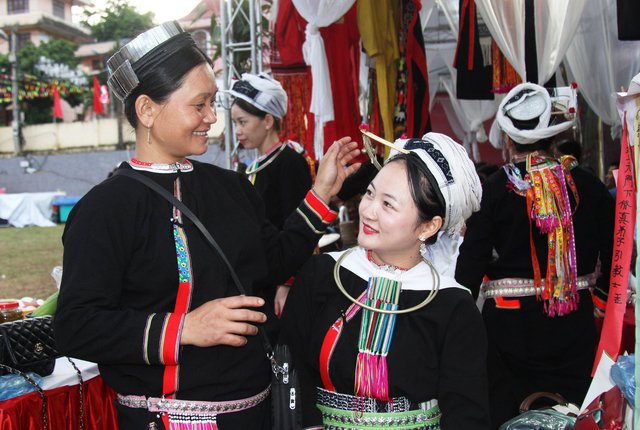
In the mountainous regions of northeastern Vietnam, the San Chay people have developed a distinctive way of life closely connected to the land, agricultural seasons, and community traditions. According to the 2019 Population and Housing Census, the San Chay population was approximately 201,398, with communities living mainly in Tuyen Quang and several neighboring northern provinces.
The traditional settlements of the San Chay are often found in hilly and mountainous areas where broad, flat rice fields are limited. These natural conditions have influenced not only their farming practices but also their customs, beliefs, and community life.
When the Landscape Shapes Everyday Life
With many hills and relatively little flat land, shifting cultivation and upland farming have historically played an important role in San Chay livelihoods. Farmers have long depended on the land, water sources, and seasonal weather to determine when to plant, tend, and harvest their crops.
Agriculture has therefore shaped the rhythm of community life. Changes in weather, the growth of crops, and the success of each harvest have influenced not only economic activities but also traditional customs and rituals.
Their close relationship with nature has also contributed to traditional beliefs surrounding the land, plants, natural forces, and the spiritual world. Ancestors and supernatural elements have traditionally held an important place in San Chay spiritual life.
Slech Thlin May – Welcoming the New Rice
One of the notable traditions of the San Chay is Slech Thlin May, commonly known as the New Rice Festival.
The festival marks the arrival of a new harvest and gives people an opportunity to celebrate the fruits of their hard work. When the first rice is harvested, families and communities prepare traditional foods and take part in rituals expressing gratitude and wishes for favorable seasons in the year ahead.
Slech Thlin May is more than an agricultural ceremony. It is also a time for people to put aside their daily farm work, reunite with relatives, and participate in community activities.
Through the festival, respect for nature and appreciation for the harvest are expressed in meaningful ways. At the same time, traditional customs and cultural values are passed from older generations to younger members of the community.
Sin Co – Songs of Love and Connection
While the New Rice Festival creates a strong sense of community, Sin Co brings a more personal and emotional dimension to San Chay culture.
Sin Co is a form of traditional courtship singing, often performed through exchanges between young men and women. Singers use poetic verses to express affection, test their ability to respond creatively, or get to know one another during community gatherings.
One of the most interesting features of Sin Co is the flexibility of its language. The songs are not limited to romantic feelings; they can also express ideas about relationships, social behavior, everyday experiences, and values passed down through generations.
For this reason, Sin Co is more than entertainment. It also serves as a way of preserving the San Chay language, oral traditions, and collective cultural memory.
Cultural Connections with Guangxi
From a historical and cultural perspective, the San Chay in Vietnam have connections with the Shanzi communities of Guangxi, China. Long-standing interactions among ethnic communities in the wider region have contributed to similarities in language, customs, and cultural practices.
At the same time, after generations of settlement in Vietnam, the San Chay have developed their own distinctive characteristics shaped by the local environment and historical experience. This combination of cultural exchange and adaptation has contributed to the diversity of San Chay identity today.
Keeping Tradition Alive in Modern Life
Modern life is bringing many changes to San Chay communities. Agricultural practices are becoming more diverse, while younger generations have greater opportunities to study and work outside their traditional villages. Some customs have also naturally evolved to fit contemporary lifestyles.
Nevertheless, traditions connected with agriculture, festivals, and folk music continue to hold an important place in community life. Slech Thlin May preserves the memory of the close relationship between people and the land, while Sin Co continues to carry expressions of affection, communication, and oral tradition.
From the upland fields to celebrations welcoming the new harvest, San Chay culture reflects a simple yet meaningful way of life. It tells the story of a community that has adapted to its mountainous environment, valued the fruits of its labor, and preserved its identity through festivals and songs passed from one generation to the next.